
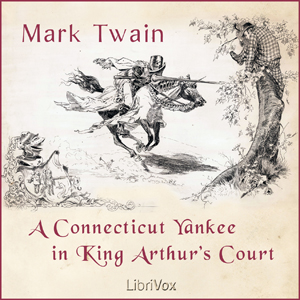
A Connecticut Yankee in King Arthur’s Court (version 2)
A Connecticut Yankee in King Arthur’s Court is an 1889 novel by American humorist and writer Mark Twain. The work is a very early example of time travel in literature, anticipating by six years H. G. Wells’ The Time Machine of 1895 (however, unlike Wells, Twain does not give any real explanation of his protagonist’s traveling in time). Some early editions are entitled A Yankee at the Court of King Arthur. (Summary by Wikipedia)
A Connecticut Yankee in King Arthur’s Court
Come and hear the strange tale of The Boss Hank Morgan, a modern day (at the time of publication) Connecticut Yankee who inexplicably finds himself transported to the court of the legendary King Arthur (as the title of the book implies). Hank, or simply, The Boss, as he comes to be most frequently known, quickly uses his modern day knowledge and education to pass himself off as a great magician, to get himself out of all sorts of surprising, (and frequently amusing) situations, as well as to advance the technological and cultural status of the nation in which he finds himself. In the rather un-subtle sub-text of the story, Twain uses The Boss to express a surprisingly pragmatic and frequently contradictory philosophy. The Boss explores the relative merits of Democracy, and Monarchy, he expresses his views on the ?Nature v. Nurture? debate, he frequently speaks forcefully against an established Church, but just as strongly advocates for religion and a variety of churches (just not a compulsory one) and he devotes at least one afternoon to introducing his companions to the concept of inflation. In a far more subtle, yet no less forceful manner, the Boss shares with the reader some views about taxation, slavery (both literal and wage slavery), trade unions, the origins of the German language, the nature of marriage, and probably most powerfully, death. It is a tall order for a relatively brief text, but Twain manages it all with surprising clarity. No one will agree fully with the Boss on all of these matters, and I would be surprised if Twain himself would. In fact the Boss?s views are so pragmatic, and often contradictory, the reader is left to wonder if Twain himself is alternately speaking through the Boss, and setting him up as a straw man. Either way it is a delightful story and a great piece of American Literature, to say nothing of an excellent argument for education. (Review written by Steve Andersen)
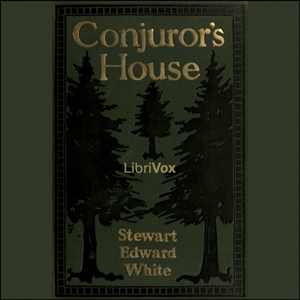
Conjuror’s House, a Romance of the Free Forest
In the northern outreaches of the Canadian wilderness, it was understood that the Hudson Bay Company governed all trading, and one factor named Galen Albret took his position seriously. Free traders, or those who dared try to do their trading outside of the Company, found themselves having to face Galen Albret and his methods of dealing with them. One or two offenses he might tolerate, but for those who repeatedly refuse to acknowledge his warning out, he would send them on ?La Longue Traverse? through the wilderness without supplies, and from which they seldom returned. Ned Trent was one such free trader who defied both the Company and Galen Albret. The defining difference between Ned and the other free traders however, was his youth, energy, and good looks, which the Factor?s daughter did not fail to recognize. What follows the initial confrontations between Ned, Galen Albret, and his daughter Virginia makes for a thrilling tale of adventure, daring, survival, and romance. Conjuror?s House was twice made into silent films titled ?The Call of the North?, the first being Cecil B. DeMille?s first film in which he received solo directorial credit, and the second starring Noah Beery and Jack Holt (whose face was the basis for the face of Dick Tracy). (Summary by Roger Melin)
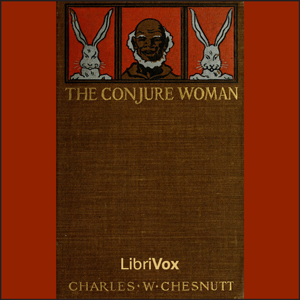
The Conjure Woman
Published in 1899 by Houghton Mifflin, Chesnutt’s first book, The Conjure Woman, was a collection of seven short stories, all set in “Patesville” (Fayetteville), North Carolina. While drawing from local color traditions and relying on dialect, Chesnutt’s tales of conjuring, a form of magic rooted in African hoodoo, refused to romanticize slave life or the “Old South.” Though necessarily informed by Joel Chandler Harris’s popular Uncle Remus stories and Thomas Nelson Page’s plantation fiction, The Conjure Woman consciously moved away from these models, instead offering an almost biting examination of pre- and post-Civil War race relations. These seven short stories use a frame narrator, John, a white carpetbagger who has moved south to protect his wife Annie’s failing health and to begin cultivating a grape vineyard. Enamored by remnants of the plantation world, John portrays the South in largely idealistic terms. Yet Uncle Julius McAdoo, the ex-slave and “trickster” figure extraordinaire who narrates the internal story lines, presents a remarkably different view of Southern life. His accounts include Aun’ Peggy’s conjure spells in “Mars Jeems’s Nightmare,” “Po’ Sandy,” “Sis’ Becky’s Pickaninny,” and “Hot Foot Hannibal” as well as those of free black conjure men in “The Conjurer’s Revenge” and “The Gray Wolf’s Ha’nt.” These conjure tales reveal moments of active black resistance to white oppression in addition to calculated (and even self-motivated) plots of revenge. (Introduction provided by Documenting the American South)
Short Nonfiction Collection Vol. 019
A collection of short nonfiction works in the public domain. The selections included in this collection were independently chosen by the readers, and the topics encompass history, literature, travel, science, medicine, war, writing, education, philosophy, and religion. (summary by J. M. Smallheer)
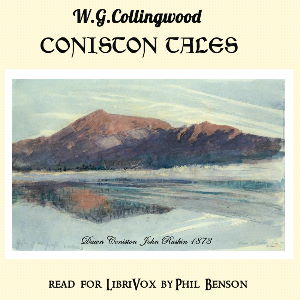
Coniston Tales
A selection of poems and short prose pieces grounded in the landscape, history and legends of Coniston in the English Lake District. W. G. Collingwood gave up a promising academic career as a young Oxford graduate to become John Ruskin’s personal secretary, living at first in his home, Brantwood, at Coniston. In the spirit of self-sufficiency that typified their community, Collingwood first published these pieces in ‘Nothing Much’, a faimily magazine edited by his young children and circulated to friends by private subscription. – Summary by Phil Benson
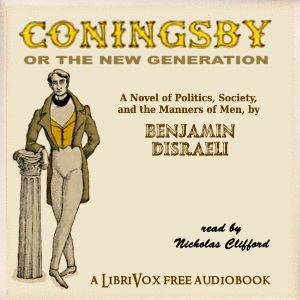
Coningsby, or The New Generation
Coningsby is the first of trilogy of political novels that Disraeli published in the 1840s, and gives an insight into his views of the political turmoil following the passage of the Great Reform Bill by the Whigs in 1832 (a second Reform Bill was passed in 1867 under Disraeli?s Tory leadership as prime minister). While Coningsby looks primarily at political questions, its successor — Sybil, or the Two Nations — was concerned with the ?condition of England? question and the growing social and economic imbalance between rich and poor that in tje writer’s view was hastened (though not begun) by the industrial revolution. Granted that Disraeli was not Dickens or Trollope or Eliot or one of the other giants of British letters in the nineteenth century, it?s a bit unfair to suggest (as some have) that the plots are thin and only there to provide the writer with a podium for setting forth his political and social views. It?s true that Boy Meets Girl, Boy Loses Girl, Boy Gets Girl, but much else happens as well, particularly thanks to the role played by the mysterious figure of the Jewish Sidonia, who in addition to enormous wealth and widespread international connections embodies a kind of wisdom that transcends the mere knowledge acquired by even the best educated Englishmen. Coningsby, himself a product of both Eton and Cambridge, is fortunate enough to be taken under his wing, and intelligent enough to accept his guidance. (Nicholas Clifford)

The Congo
The Congo is one of the best-known poems by American poet Vachel Lindsay (1879-1931). It was revolutionary in its use of sounds and rhythms ? as sounds and rhythms ? and includes elaborate annotations to guide its spoken performance. Lindsay categorized The Congo as ?higher Vaudeville? and was famous for his exuberant performances of it. The poem?s imagery is racist, but Lindsay was a product of his time ? born 14 years after the end of the American Civil War in Abraham Lincoln?s hometown, he revered Lincoln and viewed himself as a friend and supporter of African-American culture. (Summary by Kathy Thile)
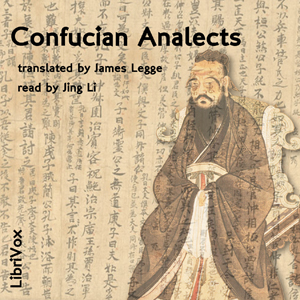
Confucian Analects
The Analects, or Lunyu (simplified Chinese: ??; traditional Chinese: ??; pinyin: L?n Y?; literally “Classified/Ordered Sayings”), also known as the Analects of Confucius, are considered a record of the words and acts of the central Chinese thinker and philosopher Confucius and his disciples, as well as the discussions they held. Written during the Spring and Autumn Period through the Warring States Period (ca. 475 BC – 221 BC), the Analects is the representative work of Confucianism and continues to have a substantial influence on Chinese and East Asian thought and values today. James Legge (Chinese: ???; December 20, 1815 ? November 29, 1897) was a noted Scottish sinologist, a Scottish Congregationalist, representative of the London Missionary Society in Malacca and Hong Kong (1840?1873), and first professor of Chinese at Oxford University (1876?1897). In association with Max M?ller he prepared the monumental Sacred Books of the East series, published in 50 volumes between 1879 and 1891. (Summary by Wikipedia)
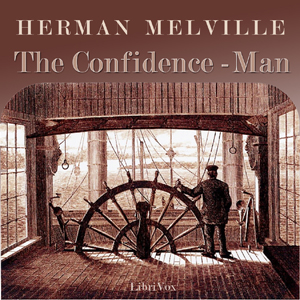
The Confidence-Man: His Masquerade
The Confidence-Man: His Masquerade was the last major novel by Herman Melville, the American writer and author of Moby-Dick. Published on April 1, 1857 (presumably the exact day of the novel’s setting), The Confidence-Man was Melville’s tenth major work in eleven years. The novel portrays a Canterbury Tales-style group of steamboat passengers whose interlocking stories are told as they travel down the Mississippi River toward New Orleans. The novel is written as cultural satire, allegory, and metaphysical treatise, dealing with themes of sincerity, identity, morality, religiosity, economic materialism, irony, and cynicism. Many critics have placed The Confidence-Man alongside Melville’s Moby-Dick and “Bartleby the Scrivener” as a precursor to 20th-century literary preoccupations with nihilism, existentialism, and absurdism. (Introduction by Wikipedia)
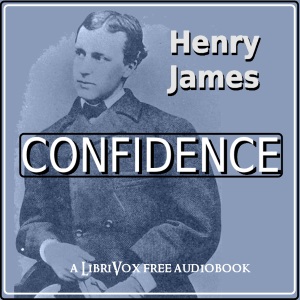
Confidence
This light and somewhat awkward comedy centers on artist Bernard Longueville, scientist Gordon Wright, and the sometimes inscrutable heroine, Angela Vivian. The plot rambles through various romantic entanglements before reaching an uncomplicated, but still believable happy ending. (wikipedia)
Confessions, volumes 5 and 6
“She was more to me than a sister, a mother, a friend, or even than a mistress, and for this very reason she was not a mistress; in a word, I loved her too much to desire her…” More of the amours of the twentysomething Jean-Jacques: here initiated into a strangely compromised manhood by his “maman” and perennial comforter – “Was I happy? No: I felt I know-not-what invincible sadness which empoisoned my happiness, it seemed that I had committed an incest, and two or three times, pressing her eagerly in my arms, I deluged her bosom with my tears. On her part, as she had never sought pleasure, she had not the stings of remorse…” (Introduction by Martin Geeson)
Confessions, volumes 3 and 4
?The smallest, the most trifling pleasure that is conveniently within my reach, tempts me more than all the joys of paradise.? Here again is the youthful, hero-worshiping Jean-Jacques ? displaying an emotional immaturity that leads him into picaresque escapades in the company of transients and misfits, always ending in reunion with mother-surrogate Madame de Warens. In a literally unprecedented gesture of self-revelation, Rousseau opens Volume 3 exposing himself indecently in dark alleyways. This 1903 edition fails to appreciate the humorous strangeness of the passage and removes it to protect the reader. (Summary by Martin Geeson)
Birds and Nature, Vol. XII, No 5, December 1902
“Birds and Nature” was a monthly publication of the Nature Study Publishing Company of Chicago. It includes short poems, anecdotes and factual descriptions of birds, animals and other natural subjects with accompanying color plates. The magazine was published from 1897-1907 under the various titles, “Birds,” “Birds and all Nature,” “Nature and Art” and “Birds and Nature.” – Summary by J. M. Smallheer
Birds and Nature, Vol. XII, No 4, November 1902
“Birds and Nature” was a monthly publication of the Nature Study Publishing Company of Chicago. It includes short poems, anecdotes and factual descriptions of birds, animals and other natural subjects with accompanying color plates. The magazine was published from 1897-1907 under the various titles, “Birds,” “Birds and all Nature,” “Nature and Art” and “Birds and Nature.” – Summary by J. M. Smallheer
Birds and Nature, Vol. XII, No 3, October 1902
“Birds and Nature” was a monthly publication of the Nature Study Publishing Company of Chicago. It includes short poems, anecdotes and factual descriptions of birds, animals and other natural subjects with accompanying color plates. The magazine was published from 1897-1907 under the various titles, “Birds,” “Birds and all Nature,” “Nature and Art” and “Birds and Nature.” – Summary by J. M. Smallheer
Birds and Nature, Vol. XII, No 2, September 1902
“Birds and Nature” was a monthly publication of the Nature Study Publishing Company of Chicago. It includes short poems, anecdotes and factual descriptions of birds, animals and other natural subjects with accompanying color plates. The magazine was published from 1897-1907 under the various titles, “Birds,” “Birds and all Nature,” “Nature and Art” and “Birds and Nature.” – Summary by J. M. Smallheer

Birds and Nature, Vol. XII, No 1, June 1902
“Birds and Nature” was a monthly publication of the Nature Study Publishing Company of Chicago. It includes short poems, anecdotes and factual descriptions of birds, animals and other natural subjects with accompanying color plates. The magazine was published from 1897-1907 under the various titles, “Birds,” “Birds and all Nature,” “Nature and Art” and “Birds and Nature.” – Summary by J. M. Smallheer
Birds and Nature, Vol. XI, No 5, May 1902
“Birds and Nature” was a monthly publication of the Nature Study Publishing Company of Chicago. It includes short poems, anecdotes and factual descriptions of birds, animals and other natural subjects with accompanying color plates. The magazine was published from 1897-1907 under the various titles, “Birds,” “Birds and all Nature,” “Nature and Art” and “Birds and Nature.” – Summary by J. M. Smallheer
Birds and Nature, Vol. XI, No 4, April 1902
“Birds and Nature” was a monthly publication of the Nature Study Publishing Company of Chicago. It includes short poems, anecdotes and factual descriptions of birds, animals and other natural subjects with accompanying color plates. The magazine was published from 1897-1907 under the various titles, “Birds,” “Birds and all Nature,” “Nature and Art” and “Birds and Nature.” – Summary by J. M. Smallheer
Birds and Nature, Vol. XI, No 3, March 1902
“Birds and Nature” was a monthly publication of the Nature Study Publishing Company of Chicago. It includes short poems, anecdotes and factual descriptions of birds, animals and other natural subjects with accompanying color plates. The magazine was published from 1897-1907 under the various titles, “Birds,” “Birds and all Nature,” “Nature and Art” and “Birds and Nature.” – Summary by J. M. Smallheer

Birds and Nature, Vol. XI, No 2, February 1902
“Birds and Nature” was a monthly publication of the Nature Study Publishing Company of Chicago. It includes short poems, anecdotes and factual descriptions of birds, animals and other natural subjects with accompanying color plates. The magazine was published from 1897-1907 under the various titles, “Birds,” “Birds and all Nature,” “Nature and Art” and “Birds and Nature.” – Summary by J. M. Smallheer
Birds and Nature, Vol. XI, No 1, January 1902
“Birds and Nature” was a monthly publication of the Nature Study Publishing Company of Chicago. It includes short poems, anecdotes and factual descriptions of birds, animals and other natural subjects with accompanying color plates. The magazine was published from 1897-1907 under the various titles, “Birds,” “Birds and all Nature,” “Nature and Art” and “Birds and Nature.” – Summary by J. M. Smallheer
Birds and Nature, Vol. X, No 5, December 1901
“Birds and Nature” was a monthly publication of the Nature Study Publishing Company of Chicago. It includes short poems, anecdotes and factual descriptions of birds, animals and other natural subjects with accompanying color plates. The magazine was published from 1897-1907 under the various titles, “Birds,” “Birds and all Nature,” “Nature and Art” and “Birds and Nature.” – Summary by J. M. Smallheer
Birds and Nature, Vol. X, No 4, November 1901
“Birds and Nature” was a monthly publication of the Nature Study Publishing Company of Chicago. It includes short poems, anecdotes and factual descriptions of birds, animals and other natural subjects with accompanying color plates. The magazine was published from 1897-1907 under the various titles, “Birds,” “Birds and all Nature,” “Nature and Art” and “Birds and Nature.” – Summary by J. M. Smallheer
Birds and Nature, Vol. X, No 3, October 1901
“Birds and Nature” was a monthly publication of the Nature Study Publishing Company of Chicago. It includes short poems, anecdotes and factual descriptions of birds, animals and other natural subjects with accompanying color plates. The magazine was published from 1897-1907 under the various titles, “Birds,” “Birds and all Nature,” “Nature and Art” and “Birds and Nature.” – Summary by J. M. Smallheer
Birds and Nature, Vol. X, No 2, September 1901
“Birds and Nature” was a monthly publication of the Nature Study Publishing Company of Chicago. It includes short poems, anecdotes and factual descriptions of birds, animals and other natural subjects with accompanying color plates. The magazine was published from 1897-1907 under the various titles, “Birds,” “Birds and all Nature,” “Nature and Art” and “Birds and Nature.” – Summary by J. M. Smallheer
Birds and Nature, Vol. X, No 1, June 1901
“Birds and Nature” was a monthly publication of the Nature Study Publishing Company of Chicago. It includes short poems and brief descriptions of birds, animals and other natural subjects with accompanying color plates. The magazine was published from 1897-1907 under the various titles, “Birds,” “Birds and all Nature,” “Nature and Art” and “Birds and Nature.” Summary by J. M. Smallheer
Birds and Nature, Vol. VIII, No 5, December 1900
“Birds and Nature” was a monthly publication of the Nature Study Publishing Company of Chicago. It includes short poems, stories and brief descriptions of birds, animals and other natural subjects with accompanying color plates. The magazine was published from 1897-1907 under the various titles, “Birds,” “Birds and All Nature,” “Nature and Art” and “Birds and Nature.” In June 1900, ?Birds and All Nature? was changed from ?Birds and All Nature? to “Nature and Art” for a single issue (Vol VIII, No. 1). The title was changed again for the following issue in September 1900 to ?Birds and Nature,? and this was kept through the remaining years of publication. – Summary by J. M. Smallheer
Birds and Nature, Vol. VIII, No 4, November 1900
“Birds and Nature” was a monthly publication of the Nature Study Publishing Company of Chicago. It includes short poems and brief descriptions of birds, animals and other natural subjects with accompanying color plates. The magazine was published from 1897-1907 under the various titles, “Birds,” “Birds and all Nature,” “Nature and Art” and “Birds and Nature.” In June 1900, ?Birds and All Nature? was changed from ?Birds and All Nature? to “Nature and Art” for a single issue (Vol VIII, No. 1). The title was changed again for the following issue in September 1900 to ?Birds and Nature,? and this was kept through the remaining years of publication. – Summary by J. M. Smallheer