
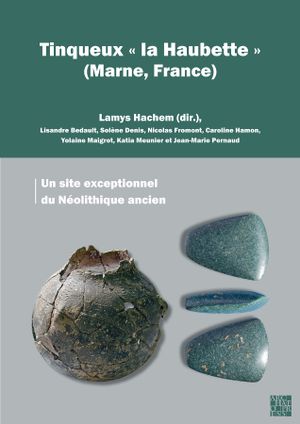


Tinqueux « la Haubette » (Marne, France): Un site exceptionnel du Néolithique ancien
The Neolithic site of Tinqueux ‘la Haubette’ (Marne) dated to the ‘Blicquy/Villeneuve-Saint-Germain’ (5000-4700 cal. BC) is composed of five houses, further series of pits and the remains of an oven. An abundance of finds has allowed us to explore a number of themes in greater detail. The first concerns the potential singularity of the site due to its very easterly location within the BVSG area of expansion and its place within the broader chronological sequence. The second is the nature of the settlement within the network of ‘producer’ and ‘receiver’ sites which characterises the BVSG. The third theme that we focus on is the provenance of raw materials, and the fourth one is the internal settlement chronology.
The analyses carried out on the settlement structure and on the archaeological finds reveal hitherto unknown facets of the BVSG culture, like refining the chronological sequence for this period in its regional facies; and establishing a particularly valuable periodisation for the site itself. Comparison with nearby and distant sites has helped us to understand the relationship of this settlement to other contemporary sites. It reveals that the site looked to the east and that there was a strong cultural dynamic which was expressed by varied networks of influence and circulation, particularly for the acquisition of raw materials and finished products.
| Publication Language |
English |
|---|---|
| Publication Access Type |
Freemium |
| Publication Author |
Lamys Hachem |
| Publisher |
Archaeopress Publishing Ltd |
| Publication Year |
2023 |
| Publication Type |
eBooks |
| ISBN/ISSN |
9780000000000 |
| Publication Category |
Open Access Books |
Kindly Register and Login to Shri Guru Nanak Dev Digital Library. Only Registered Users can Access the Content of Shri Guru Nanak Dev Digital Library.
You must be logged in to post a review.






Reviews
There are no reviews yet.