
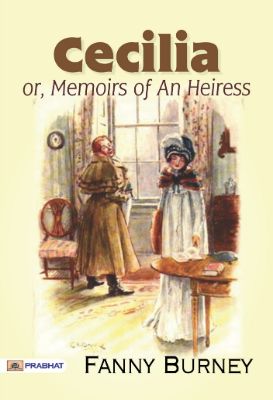
Cecilia, or, Memoirs of an Heiress by Fanny Burney
Under these circumstances it is naturally less fresh and spontaneous than Evelina, but it is more mature. The touch is surer and the plot more elaborate. We cannot to-day fully appreciate the “conflict scene between mother and son,” for which, Miss Burney tells us, the book was written; but the pictures of eighteenth century affectations are all alive, and the story is thoroughly absorbing, except, perhaps, in the last book.
The Mind Cure by Christian Larson
IT IS a well-known fact that a considerable majority of the people in this country are addicted more or less to nervousness in one or more of its many forms; and as nervousness is the direct cause of all mental ills, and the indirect cause of a great many physical ills, organic as well as functional, there are few things that would be more important than that of finding a method through which health for the nerves could be secured. How to cure this malady has long been a problem. Medicine as a rule avails but little, and the various forms of other therapeutic systems reach but a limited number. It is therefore that the discovery of a remedy that could reach all cases, or nearly all cases, would easily be considered one of the most remarkable discoveries of the age.

The Twelve Powers of Man by Charles Fillmore
JESUS prophesied the advent of a race of men who would sit with Him on twelve thrones, judging the twelve tribes of Israel. This book explains the meaning of this mystical reference, what and where the twelve thrones are, and what attainments are necessary by man before he can follow Jesus in this phase of his regeneration. Regeneration follows generation in the development of man. Generation sustains and perpetuates the human; regeneration unfolds and glorifies the divine.

The Adventures of Peregrine Pickle by Tobias Smollett
In a certain county of England, bounded on one side by the sea, and at the distance of one hundred miles from the metropolis, lived Gamaliel Pickle, esq.; the father of that hero whose fortunes we propose to record. He was the son of a merchant in London, who, like Rome, from small beginnings had raised himself to the highest honours of the city, and acquired a plentiful fortune, though, to his infinite regret, he died before it amounted to a plum, conjuring his son, as he respected the last injunction of a parent, to imitate his industry, and adhere to his maxims, until he should have made up the deficiency, which was a sum considerably less than fifteen thousand pounds.

The Boy Inventor’s Wireless Triumph by Richard Bonner
The book Jack Chadwick had been reading,—a volume dealing with some rather dry experimental work,—slipped from his fingers and fell with a crash on the floor of the veranda. At the sudden interruption to the sleepy, breathless calm of Lone Island on a July noon, his cousin Tom Jesson, sixteen, and more than a year Jack’s junior, looked up from the steamer chair in which he, too, was extended, with one of his quiet smiles.
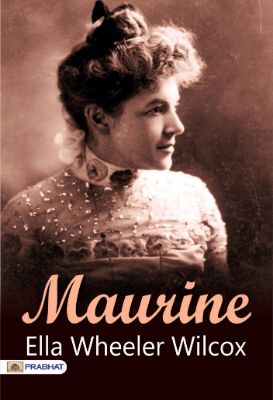
Maurine by Ella Wheeler Wilcox
I step across the mystic border-land,
And look upon the wonder-world of Art.
How beautiful, how beautiful its hills!
And all its valleys, how surpassing fair!
The winding paths that lead up to the heights
Are polished by the footsteps of the great.
The mountain‑peaks stand very near to God:
The chosen few whose feet have trod thereon
Have talked with Him, and with the angels walked.

Experiences in Self-Healing by Elizabeth Towne.
My first remembered experience in self-healing occurred nineteen years ago, before I had ever heard of a new thought, or even of Christian Science; and before I had ever dreamed there could be any healing except by calomel and quinine. And yet I healed myself, and I knew when I did it.
Lessons in Living by Elizabeth Towne
IN this book I design to state in logical and practical form the new philosophy of life and living. To do this I must stick closely to a clear statement of the philosophy itself, without trying to give you too many proofs.

You and Your Forces or the Constitution of Man by Elizabeth Towne
Can you “become as a little child”? Can you, for the time being, lay aside all your preconceived opinions? Can you let go all the authorities — theologians, scientists, relatives and friends alike — upon whom you have been, perhaps unconsciously, leaning? Can you leave all these and give these lessons your undivided attention? Only so will you be materially enlightened by what you read, whether it be these lessons or some other book.

Love, Life & Work by Elbert Hubbard
“Evolution is better than Revolution. New Thought Library’s New Thought Archives encompass a full range of New Thought media from Abrahamic to Vedic reflecting the ongoing evolution of human thought. New Thought’s unique inclusion of science, art and philosophy contrasts with ‘old thought’ Religion. Today’s ‘New Thought 3.0’ teaches personal responsibility, self-development, human rights and compassionate action as essential spiritual paradigms.” ~ Avalon de Rossett

Castle Richmond by Anthony Trollope
The value of the story is rather documentary than literary. It contains several graphic scenes descriptive of the great Irish famine. Trollope observed carefully, and on the whole impartially, though his powers of discrimination were not quite fine enough to make him an ideal annalist.

Biographia Literaria by Samuel Taylor Coleridge
Motives to the present work—Reception of the Author’s first publication—Discipline of his taste at school—Effect of contemporary writers on youthful minds—Bowles’s Sonnets—Comparison between the poets before and since Pope.

Areopagitica by John Milton
They, who to states and governors of the Commonwealth direct their speech, High Court of Parliament, or, wanting such access in a private condition, write that which they foresee may advance the public good; I suppose them, as at the beginning of no mean endeavour, not a little altered and moved inwardly in their minds: some with doubt of what will be the success, others with fear of what will be the censure; some with hope, others with confidence of what they have to speak. And me perhaps each of these dispositions, as the subject was whereon I entered, may have at other times variously affected; and likely might in these foremost expressions now also disclose which of them swayed most, but that the very attempt of this address thus made, and the thought of whom it hath recourse to, hath got the power within me to a passion, far more welcome than incidental to a preface.
Bartholomew Fair by Ben Jonson
Stage. Gentlemen, have a little patience, they are e’en upon coming, instantly. He that should begin the play, master Littlewit, the proctor, has a stitch new fallen in his black silk stocking; ’twill be drawn up ere you can tell twenty: he plays one o’ the Arches that dwells about the hospital, and he has a very pretty part. But for the whole play, will you have the truth on’t?—I am looking, lest the poet hear me, or his man, master Brome, behind the arras—it is like to be a very conceited scurvy one, in plain English. When’t comes to the Fair once, you were e’en as good go to Virginia, for any thing there is of Smithfield.
Candida by George Bernard Shaw
This desert of unattractiveness has its oasis. Near the outer end of the Hackney Road is a park of 217 acres, fenced in, not by railings, but by a wooden paling, and containing plenty of greensward, trees, a lake for bathers, flower beds with the flowers arranged carefully in patterns by the admired cockney art of carpet gardening and a sandpit, imported from the seaside for the delight of the children, but speedily deserted on its becoming a natural vermin preserve for all the petty fauna of Kingsland, Hackney and Hoxton. A bandstand, an unfinished forum for religious, anti-religious and political orators, cricket pitches, a gymnasium, and an old fashioned stone kiosk are among its attractions. Wherever the prospect is bounded by trees or rising green grounds, it is a pleasant place. Where the ground stretches far to the grey palings, with bricks and mortar, sky signs, crowded chimneys and smoke beyond, the prospect makes it desolate and sordid.

The Comedy of Errors by William Shakespeare
Duke. Merchant of Syracusa, plead no more;
I am not partial to infringe our laws:
The enmity and discord which of late
Sprung from the rancorous outrage of your duke
To merchants, our well-dealing countrymen,
Who, wanting guilders to redeem their lives,
Have seal’d his rigorous statutes with their bloods,
Excludes all pity from our threatening looks.
For, since the mortal and intestine jars
’Twixt thy seditious countrymen and us,
It hath in solemn synods been decreed,
Both by the Syracusians and ourselves,
To admit no traffic to our adverse towns:
The Trojan Women of Euripides by Euripides
Judged by common standards, the Troädes is far from a perfect play; it is scarcely even a good play. It is an intense study of one great situation, with little plot, little construction, little or no relief or variety. The only movement of the drama is a gradual extinguishing of all the familiar lights of human life, with, perhaps, at the end, a suggestion that in the utterness of night, when all fears of a possible worse thing are passed, there is in some sense peace and even glory. But the situation itself has at least this dramatic value, that it is different from what it seems.

The Beggar’s Opera by John Gay
Through all the Employments of Life
Each Neighbour abuses his Brother;
Whore and Rogue they call Husband and Wife:
All Professions be-rogue one another:
The Priest calls the Lawyer a Cheat,
The Lawyer be-knaves the Divine:
And the Statesman, because he’s so great,
Thinks his Trade as honest as mine.
The Drama of Love and Death by Edward Carpenter
Love and Death move through this world of ours like things apart—underrunning it truly, and everywhere present, yet seeming to belong to some other mode of existence. When Death comes, breaking into the circle of our friends, words fail us, our mental machinery ceases to operate, all our little stores of wit and wisdom, our maxims, our mottoes, accumulated from daily experience, evaporate and are of no avail. These things do not seem to touch or illuminate in any effective way the strange vast Presence whose wings darken the world for us. And with Love, though in an opposite sense, it is the same. Words are of no use, all our philosophy fails—whether to account for the pain, or to fortify against the glamour, or to describe the glory of the experience.

Amelia by Henry Fielding
Fielding’s third great novel has been the subject of much more discordant judgments than either of its forerunners. If we take the period since its appearance as covering four generations, we find the greatest authority in the earliest, Johnson, speaking of it with something more nearly approaching to enthusiasm than he allowed himself in reference to any other work of an author, to whom he was on the whole so unjust. The greatest man of letters of the next generation, Scott (whose attitude to Fielding was rather undecided, and seems to speak a mixture of intellectual admiration and moral dislike, or at least failure in sympathy), pronounces it “on the whole unpleasing,” and regards it chiefly as a sequel to Tom Jones, showing what is to be expected of a libertine and thoughtless husband. But he too is enthusiastic over the heroine. Thackeray (whom in this special connection at any rate it is scarcely too much to call the greatest man of the third generation) overflows with predilection for it, but chiefly, as it would seem, because of his affection for Amelia herself, in which he practically agrees with Scott and Johnson. It would be invidious, and is noways needful, to single out any critic of our own time to place beside these great men. But it cannot be denied that the book, now as always, has incurred a considerable amount of hinted fault and hesitated dislike. Even Mr. Dobson notes some things in it as “unsatisfactory;” Mr. Gosse, with evident consciousness of temerity, ventures to ask whether it is not “a little dull.” The very absence of episodes (on the ground that Miss Matthews’s story is too closely connected with the main action to be fairly called an episode) and of introductory dissertations has been brought against it, as the presence of these things was brought against its forerunners.

Anna Christie by Eugene O’Neill
SCENE—”Johnny-The-Priest’s” saloon near South Street, New York City. The stage is divided into two sections, showing a small back room on the right. On the left, forward, of the barroom, a large window looking out on the street. Beyond it, the main entrance—a double swinging door. Farther back, another window. The bar runs from left to right nearly the whole length of the rear wall. In back of the bar, a small showcase displaying a few bottles of case goods, for which there is evidently little call. The remainder of the rear space in front of the large mirrors is occupied by half-barrels of cheap whiskey of the “nickel-a-shot” variety, from which the liquor is drawn by means of spigots. On the right is an open doorway leading to the back room. In the back room are four round wooden tables with five chairs grouped about each. In the rear, a family entrance opening on a side street.

The Great Invasion of 1813-14 by Erckmann-Chatrian
If you would like to know the story of the Great Invasion of 1814, just as it was told me by the old huntsman, Frantz du Hengst, you must come with me to the village of Charmes, in that province of France called the Vosges. About thirty little houses, with stuccoed fronts, and their roofs covered with dark green moss, are dotted along the borders of the Sarre; you can see their gables round which the ivy creeps and the honeysuckle twines—the honeysuckle withered now, for winter is near—the beehives closed with wisps of straw, the little gardens, the wooden palings, the hedge-rows that divide them from each other.

Auguste Comte and Positivism by John Stuart Mill
For some time much has been said, in England and on the Continent, concerning “Positivism” and “the Positive Philosophy.” Those phrases, which during the life of the eminent thinker who introduced them had made their way into no writings or discussions but those of his very few direct disciples, have emerged from the depths and manifested themselves on the surface of the philosophy of the age. It is not very widely known what they represent, but it is understood that they represent something.

The Art of Tying the Cravat Demonstrated in sixteen lessons by H. Le Blanc
No one accustomed to mix with the higher classes of society will be at all inclined to dispute the advantages arising from a genteel appearance; it therefore becomes necessary that the means of acquiring this distinction should be clearly demonstrated. An attentive perusal of the following pages will conduce to this desired effect.

The Country of the Pointed Firs by Sarah Orne Jewett
SARAH ORNE JEWETT (1849-1909) was born and died in South Berwick, Maine. Her father was the region’s most distinguished doctor and, as a child, Jewett often accompanied him on his round of patient visits. She began writing poetry at an early age and when she was only 19 her short story “Mr. Bruce” was accepted by the Atlantic Monthly. Her association with that magazine continued, and William Dean Howells, who was editor at that time, encouraged her to publish her first book, Deephaven (1877), a collection of sketches published earlier in the Atlantic Monthly. Through her friendship with Howells, Jewett became acquainted with Boston’s literary elite, including Annie Fields, with whom she developed one of the most intimate and lasting relationships of her life.
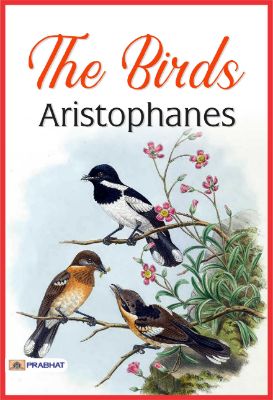
The Birds by Aristophanes
The Birds’ differs markedly from all the other Comedies of Aristophanes which have come down to us in subject and general conception. It is just an extravaganza pure and simple—a graceful, whimsical theme chosen expressly for the sake of the opportunities it afforded of bright, amusing dialogue, pleasing lyrical interludes, and charming displays of brilliant stage effects and pretty dresses. Unlike other plays of the same Author, there is here apparently no serious political MOTIF underlying the surface burlesque and buffoonery.
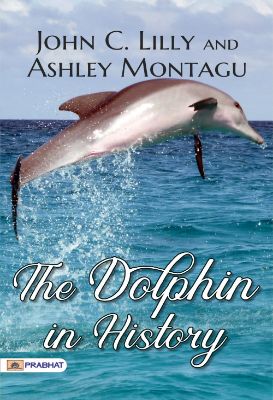
The Dolphin in History by John C. Lilly and Ashley Montagu
Recently the dolphin has become the focus of much scientific interest and investigation which have led to flattering pronouncements about its remarkable intelligence, amiability, and astonishing friendliness towards man. It was in consequence of such activities that a symposium was held at the William Andrews Clark Memorial Library to consider the background to contemporary studies of the dolphin. The presentations of Dr. Ashley Montagu and Dr. John C. Lilly were received so favorably that it was decided to make them more widely available in the present form.
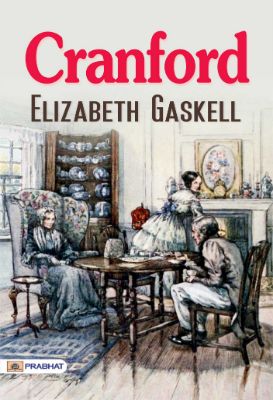
Cranford by Elizabeth Gaskell
The Cranford ladies have only an occasional little quarrel, spirited out in a few peppery words and angry jerks of the head; just enough to prevent the even tenor of their lives from becoming too flat. Their dress is very independent of fashion; as they observe, “What does it signify how we dress here at Cranford, where everybody knows us?” And if they go from home, their reason is equally cogent, “What does it signify how we dress here, where nobody knows us?” The materials of their clothes are, in general, good and plain, and most of them are nearly as scrupulous as Miss Tyler, of cleanly memory; but I will answer for it, the last gigot, the last tight and scanty petticoat in wear in England, was seen in Cranford—and seen without a smile.
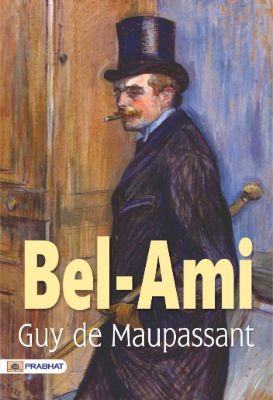
Bel-Ami by Guy de Maupassant
When the cashier had given him the change out of his five francpiece, George Duroy left the restaurant.
As he had a good carriage, both naturally and from his military training, he drew himself up, twirled his moustache, and threw upon the lingering customers a rapid and sweeping glance—one of those glances which take in everything within their range like a casting net.
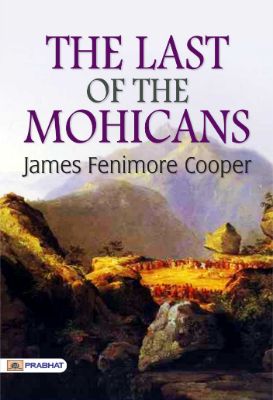
The Last of the Mohicans by James Fenimore Cooper — not in English Common Knowledge
It was a feature peculiar to the colonial wars of North America, that the toils and dangers of the wilderness were to be encountered before the adverse hosts could meet. A wide and apparently an impervious boundary of forests severed the possessions of the hostile provinces of France and England. The hardy colonist, and the trained European who fought at his side, frequently expended months in struggling against the rapids of the streams, or in effecting the rugged passes of the mountains, in quest of an opportunity to exhibit their courage in a more martial conflict. But, emulating the patience and self-denial of the practised native warriors, they learned to overcome every difficulty; and it would seem that, in time, there was no recess of the woods so dark, nor any secret place so lovely, that it might claim exemption from the inroads of those who had pledged their blood to satiate their vengeance, or to uphold the cold and selfish policy of the distant monarchs of Europe.