

The Boy and His Gang by J. Adams Puffer
Sixty-six boys who were members of gangs are responsible for this book. They told me the stories of their gang life and I wrote them out in the form illustrated in Chapter II. I showed these stories to President G. Stanley Hall, who asked me to present them in the Pedagogical Seminary, where an article appeared in June, 1905. These original stories of Boys’ Gangs and Boy Leaders later became the basis for a series of lectures on Boy Problems. In revising my material for book publication, many interesting criticisms by parents, teachers, and social workers, in various sections of the country have been consciously or unconsciously incorporated into it. I have found a wide interest in and demand for such a book as this—bearing upon the group psychology of boyhood—and a lamentable scarcity of readable literature on the subject.
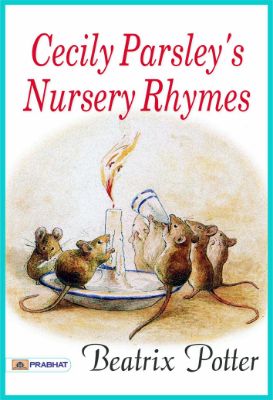
Cecily Parsley’s Nursery Rhymes by Beatrix Potter
Goosey, goosey, gander,
Whither will you wander?
Upstairs and downstairs,
And in my lady’s chamber!
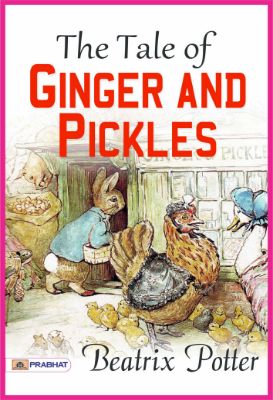
The Tale of Ginger and Pickles by Beatrix Potter
Once upon a time there was a village shop. The name over the window was “Ginger and Pickles.”
It was a little small shop just the right size for Dolls—Lucinda and Jane Doll-cook always bought their groceries at Ginger and Pickles.
The counter inside was a convenient height for rabbits. Ginger and Pickles sold red spotty pocket-handkerchiefs at a penny three farthings.
They also sold sugar, and snuff and galoshes.

Why a Hindu is a Vegetarian by Abhedananda
Eminent physicians and dietetic reformers of the present day are deeply interested in solving the great problem of wholesome food for human beings, and in introducing food reform in western countries.
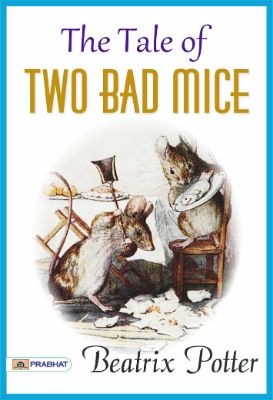
The Tale of Two Bad Mice by Beatrix Potter
As the fish would not come off the plate, they put it into the red-hot crinkly paper fire in the kitchen; but it would not burn either.
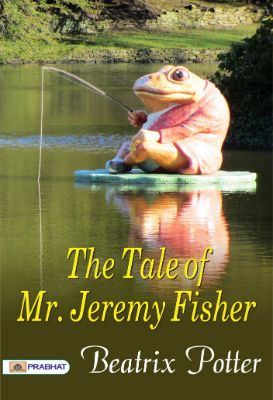
The Tale of Mr. Jeremy Fisher by Beatrix Potter
Once upon a time there was a frog called Mr. Jeremy Fisher; he lived in a little damp house amongst the buttercups at the edge of a pond.
The water was all slippy-sloppy in the larder and in the back passage.
But Mr. Jeremy liked getting his feet wet; nobody ever scolded him, and he never caught a cold!
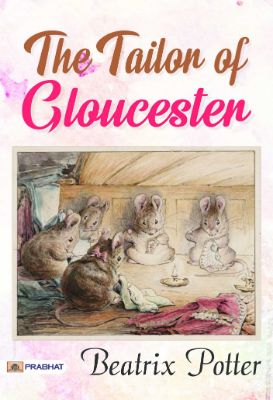
The Tailor of Gloucester by Beatrix Potter
In the time of swords and periwigs and full-skirted coats with flowered lappets—when gentlemen wore ruffles, and gold-laced waistcoats of paduasoy and taffeta—there lived a tailor in Gloucester.
He sat in the window of a little shop in Westgate Street, cross-legged on a table, from morning till dark.
All day long while the light lasted he sewed and snippeted, piecing out his satin and pompadour, and lutestring; stuffs had strange names, and were very expensive in the days of the Tailor of Gloucester.

The Tale of Jemima Puddle-Duck by Beatrix Potter
Her sister-in-law, Mrs. Rebeccah Puddle-duck, was perfectly willing to leave the hatching to some one else—”I have not the patience to sit on a nest for twenty-eight days; and no more have you, Jemima. You would let them go cold; you know you would!”
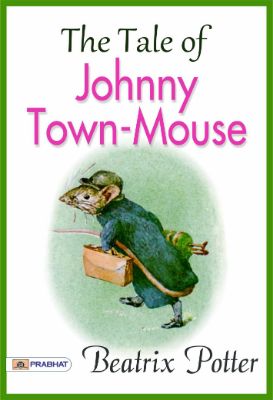
The Tale of Johnny Town-Mouse by Beatrix Potter
Johnny Town-mouse was born in a cupboard. Timmy Willie was born in a garden. Timmy Willie was a little country mouse who went to town by mistake in a hamper. The gardener sent vegetables to town once a week by carrier; he packed them in a big hamper.

The Rape of the Lock and Other Poems by Alexander Pope
It has been the aim of the editor in preparing this little book to get together sufficient material to afford a student in one of our high schools or colleges adequate and typical specimens of the vigorous and versatile genius of Alexander Pope. With this purpose he has included in addition to The Rape of the Lock, the Essay on Criticism as furnishing the standard by which Pope himself expected his work to be judged, the First Epistle of the Essay on Man as a characteristic example of his didactic poetry, and the Epistle to Arbuthnot, both for its exhibition of Pope’s genius as a satirist and for the picture it gives of the poet himself. To these are added the famous close of the Dunciad, the Ode to Solitude, a specimen of Pope’s infrequent lyric note, and the Epitaph on Gay.
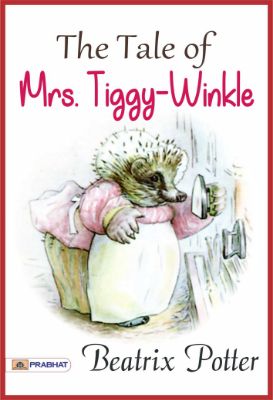
The Tale of Mrs. Tiggy-Winkle by Beatrix Potter
NCE upon a time there was a little girl called Lucie, who lived at a farm called Little-town. She was a good little girl—only she was always losing her pocket- handkerchiefs!
One day little Lucie came into the farm-yard crying— oh, she did cry so! “I’ve lost my pocket-handkin! Three handkins and a pinny! Have you seen them, Tabby Kitten?”
THE Kitten went on washing her white paws; so Lucie asked a speckled hen—
“Sally Henny-penny, have you found three pocket-handkins?”
But the speckled hen ran into a barn, clucking—
“I go barefoot, barefoot, barefoot!”
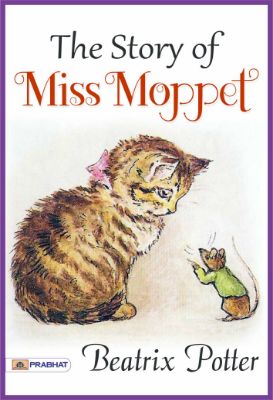
The Story of Miss Moppet by Beatrix Potter
This is a Pussy called Miss Moppet, she thinks she has heard a mouse!
This is the Mouse peeping out behind the cupboard, and making fun of Miss Moppet. He is not afraid of a kitten.
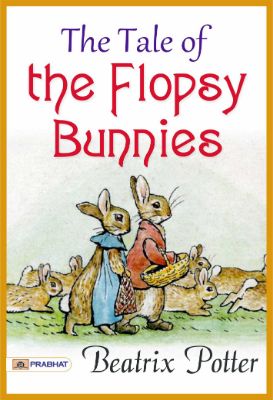
The Tale of the Flopsy Bunnies by Beatrix Potter
It is said that the effect of eating too much lettuce is “soporific.”
I have never felt sleepy after eating lettuces; but then I am not a rabbit.
They certainly had a very soporific effect upon the Flopsy Bunnies!
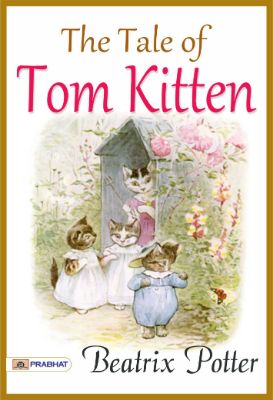
The Tale of Tom Kitten by Beatrix Potter
Once upon a time there were three little kittens, and their names were Mittens, Tom Kitten, and Moppet.
They had dear little fur coats of their own; and they tumbled about the doorstep and played in the dust.
But one day their mother—Mrs. Tabitha Twitchit—expected friends to tea; so she fetched the kittens indoors, to wash and dress them, before the fine company arrived.
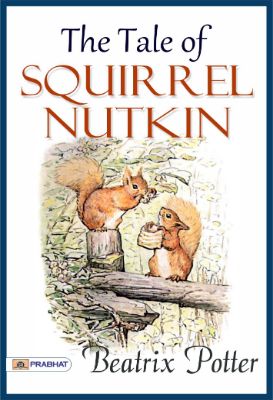
The Tale of Squirrel Nutkin by Beatrix Potter
They also took with them an offering of three fat mice as a present for Old Brown, and put them down upon his door-step.
Then Twinkleberry and the other little squirrels each made a low bow, and said politely—
“Old Mr. Brown, will you favour us with permission to gather nuts upon your island?”
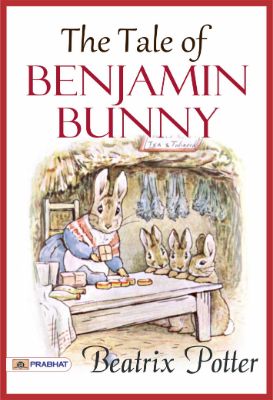
The Tale of Benjamin Bunny by Beatrix Potter
One morning a little rabbit sat on a bank.
He pricked his ears and listened to the trit-trot, trit-trot of a pony.
A gig was coming along the road; it was driven by Mr. McGregor, and beside him sat Mrs. McGregor in her best bonnet.

Anne’s House of Dreams by Lucy Maud Montgomery
The garret was a shadowy, suggestive, delightful place, as all garrets should be. Through the open window, by which Anne sat, blew the sweet, scented, sun-warm air of the August afternoon; outside, poplar boughs rustled and tossed in the wind; beyond them were the woods, where Lover’s Lane wound its enchanted path, and the old apple orchard which still bore its rosy harvests munificently. And, over all, was a great mountain range of snowy clouds in the blue southern sky. Through the other window was glimpsed a distant, white-capped, blue sea—the beautiful St. Lawrence Gulf, on which floats, like a jewel, Abegweit, whose softer, sweeter Indian name has long been forsaken for the more prosaic one of Prince Edward Island.
A Midsummer Night’s Dream by William Shakespeare
Full of vexation come I, with complaint
Against my child, my daughter Hermia.
Stand forth, Demetrius. My noble lord,
This man hath my consent to marry her.
Stand forth, Lysander. And, my gracious Duke,
This man hath bewitch’d the bosom of my child.
Thou, thou, Lysander, thou hast given her rhymes,
And interchang’d love-tokens with my child.
Thou hast by moonlight at her window sung,
With feigning voice, verses of feigning love;
And stol’n the impression of her fantasy

The Zen Experience by Thomas Hoover
Some call it “seeing,” some call it “knowing,” and some describe it in religious terms. Whatever the name, it is our reach for a new level of consciousness. Of the many forms this search has taken, perhaps the most intriguing is Zen. Growing out of the wisdom of China, India, and Japan, Zen became a powerful movement to explore the lesser-known reaches of the human mind. Today Zen has come westward, where we are rediscovering modern significance in its ancient insights. This book is an attempt to encounter Zen in its purest form, by returning to the greatest Zen masters.

The Indian Fairy Book by Henry Rowe Schoolcraft
When the story-tellers sat at the lodge fires in the long evenings to tell of the manitoes and their magic, of how the little boy snared the sun, of the old Toad Woman who stole the baby, and the other tales that had been retold to generation after generation of red children, time out of mind, Mr. Schoolcraft listened and wrote the stories down, just as he heard them.

Wonder Tales from Many Lands by Katharine Pyle
The Prince wondered greatly at his father’s words, but he took the key and went to the top of the castle, and there he found the steel door his father had described. He unlocked it with the silver key, stepped inside, and looked about him. When he had done so, he was filled with amazement at what he saw. The room had twelve sides, and on eleven of these sides were pictures of eleven princesses more beautiful than any the Prince had ever seen in all his life before. Moreover, these pictures were as though they were alive. When the Prince looked at them, they moved and smiled and blushed and beckoned to him. He went from one to the other, and they were so beautiful that each one he looked upon seemed lovelier than the last. But lovely though they were, there was not one of them whom the Prince wished to have for a wife.
Stories the Iroquois Tell Their Children by Mabel Powers
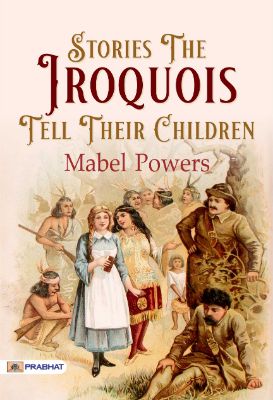
Now we have little left but stories of our fathers. They, too, will soon be lost and forgotten, but a voice has come to speak for us. Yeh sen noh wehs—the one who tells the stories—will carry these stories of our fathers to Paleface. She will help White man to understand Indian, Indian to be understood. She will have all men brothers.
Indian’s heart is glad that Yeh sen noh wehs, our white friend, has come to us. She have good eyes. She see right. She like things Indian. She try to preserve them. Our old men and women tell her the stories told them, many, many moons ago, when little children.

Zen by Jerome Bixby
IT’S difficult, when you’re on one of the asteroids, to keep from tripping, because it’s almost impossible to keep your eyes on the ground. They never got around to putting portholes in spaceships, you know—unnecessary when you’re flying by GB, and psychologically inadvisable, besides—so an asteroid is about the only place, apart from Luna, where you can really see the stars.
The Moon Pool by Abraham Merritt
The publication of the following narrative of Dr. Walter T. Goodwin has been authorized by the Executive Council of the International Association of Science.
The Affair of the Brains by Anthony Gilmore
THOUGH it is seldom nowadays that Earthmen hear mention of Hawk Carse, there are still places in the universe where his name retains all its old magic. These are the lonely outposts of the farthest planets, and here when the outlanders gather to yarn the idle hours away their tales conjure up from the past that raw, lusty period before the patrol-ships came, and the slender adventurer, gray-eyed and with queer bangs of hair obscuring his forehead, whose steely will, phenomenal ray-gun draw and reckless space-ship maneuverings combined to make him the period’s most colorful figure. These qualities of his live again in the outlanders’ reminiscences and also of course his score of blood-feuds and the one great feud that shook whole worlds in its final terrible settling—the feud of Hawk Carse and Dr. Ku Sui.

The Brain, A Decoded Enigma by Dorin Teodor Moisa
As any scientific theory, it is a symbolic model. Any symbolic model is based on a limited number of basic terms and a limited number of basic relations between the basic terms.
For the basic terms and only for them, there are accepted descriptive definitions. All the others terms are generated by the model, together with their normal definitions. These definitions are generated by the model by logical and mathematical procedures.
These are the basic characteristics of any scientific theory and so, I follow the procedures described above, to make a theory on the basic hardware functions of the brain.
This theory is in a total opposition with all the actual sciences associated with the functions of the brain. The present sciences, associated with the functions of the brain, are not based on a single fundamental model. In this way, as my theory will be accepted, all what it was already written in the actual sciences associated with the functions of the brain, have to be re-written or forgotten.
Prejudices, Third Series by H. L. Mencken
Apparently there are those who begin to find it disagreeable—nay, impossible. Their anguish fills the Liberal weeklies, and every ship that puts out from New York carries a groaning cargo of them, bound for Paris, London, Munich, Rome and way points—anywhere to escape the great curses and atrocities that make life intolerable for them at home. Let me say at once that I find little to cavil at in their basic complaints. In more than one direction, indeed, I probably go a great deal further than even the Young Intellectuals. It is, for example, one of my firmest and most sacred beliefs, reached after an inquiry extending over a score of years and supported by incessant prayer and meditation, that the government of the United States, in both its legislative arm and its executive arm, is ignorant, incompetent, corrupt, and disgusting—and from this judgment I except no more than twenty living lawmakers and no more than twenty executioners of their laws. It is a belief no less piously cherished that the administration of justice in the Republic is stupid, dishonest, and against all reason and equity—and from this judgment I except no more than thirty judges, including two upon the bench of the Supreme Court of the United States. It is another that the foreign policy of the United States—its habitual manner of dealing with other nations, whether friend or foe—is hypocritical, disingenuous, knavish, and dishonorable—and from this judgment I consent to no exceptions whatever, either recent or long past. And it is my fourth (and, to avoid too depressing a bill, final) conviction that the American people, taking one with another, constitute the most timorous, sniveling, poltroonish, ignominious mob of serfs and goose-steppers ever gathered under one flag in Christendom since the end of the Middle Ages, and that they grow more timorous, more sniveling, more poltroonish, more ignominious every day.
Child psychology Vol-2 by Vilhelm Rasmussen
The sub-title of this book is in reality illogical, for the two children who have been especially studied and who are the subject of this book, have not attended a kindergarten for any considerable period. A trial was made with the eldest child, R., when she was four years and five months old, but unsuccessfully. Before the event R. was greatly excited at the thought of playing with so many other children, and accompanied her mother expectantly. But upon her return home it was obvious that she had been disappointed, and, contrary to custom, she said very little about her experiences. “We built a house with a big door,” and “The mistress sang about a bird that flew,” was all she had to report.
Desiring to form an estimate of the kindergarten, I went there one day, and, I must admit, was not favourably impressed. The mistress did not possess the necessary qualifications for her position; and as R. with good reason found the proceedings wearisome, she was, after about a month’s trial, taken away again.

A Collection of Beatrix Potter Stories by Beatrix Potter
ONCE upon a time there were four little Rabbits, and their names were—
Flopsy, Mopsy, Cotton-tail, and Peter.
They lived with their Mother in a sand-bank, underneath the root of a very big fir tree.
“NOW, my dears,” said old Mrs. Rabbit one morning, “you may go into the fields or down the lane, but don’t go into Mr. McGregor’s garden: your Father had an accident there; he was put in a pie by Mrs. McGregor.”
The Metal Monster by Abraham Merritt
Before the narrative which follows was placed in my hands, I had never seen Dr. Walter T. Goodwin, its author.
When the manuscript revealing his adventures among the pre-historic ruins of the Nan-Matal in the Carolines (The Moon Pool) had been given me by the International Association of Science for editing and revision to meet the requirements of a popular presentation, Dr. Goodwin had left America. He had explained that he was still too shaken, too depressed, to be able to recall experiences that must inevitably carry with them freshened memories of those whom he loved so well and from whom, he felt, he was separated in all probability forever.