
The Rover Boys at School; Or, The Cadets of Putnam Hall by Arthur M. Winfield
While Putnam Hall is not the real name of the particular place of learning I had in mind while penning this tale for your amusement and instruction, there is really such a school, and dear Captain Putnam is a living person, as are also the lively, wide-awake, fun-loving Rover brothers, Dick, Tom, and Sam, and their schoolfellows, Larry, Fred, and Frank. The same can be said, to a certain degree, of the bully Dan Baxter, and his toady, the sneak, commonly known as “Mumps.”

The Mystery at Putnam Hall: The School Chums’ Strange Discovery by Stratemeyer
This story is complete in itself, but forms the sixth volume in a line issued under the general title of “Putnam Hall Series.”
As mentioned several times, this line was started because many young folks wanted to know what happened at Putnam Hall Military School previous to the arrival at that institution of the Rover boys, as already related in my “Rover Boys Series.”
The Willoughby Captains by Talbot Baines Reed
Something unusual is happening at Willoughby. The Union Jack floats proudly over the old ivy-covered tower of the school, the schoolrooms are deserted, there is a band playing somewhere, a double row of carriages is drawn up round the large meadow (familiarly called “The Big”), old Mrs Gallop, the orange and sherbert woman, is almost beside herself with business flurry, and boys are going hither and thither, some of them in white ducks with favours on their sleeves, and others in their Sunday “tiles,” with sisters and cousins and aunts in tow, whose presence adds greatly to the brightness of the scene.
Parkhurst Boys, and Other Stories of School Life by Talbot Baines Reed
It was a proud moment in my existence when Wright, captain of our football club, came up to me in school one Friday and said, “Adams, your name is down to play in the match against Craven to-morrow.”
Follow My Leader: The Boys of Templeton by Talbot Baines Reed
On a raw, damp morning in early spring, a rather forlorn group of three youngsters might have been seen on the doorstep of Mountjoy Preparatory School, casting nervous glances up and down the drive, and looking anything but a picture of the life and spirits they really represented.

The Cock-House at Fellsgarth by Talbot Baines Reed
First-night at Fellsgarth was always a festive occasion. The holidays were over, and school had not yet begun. All day long, from remote quarters, fellows had been converging on the dear old place; and here they were at last, shoulder to shoulder, delighted to find themselves back in the old haunts. The glorious memories of the summer holidays were common property. So was not a little of the pocket-money. So, by rule immemorial, were the contents of the hampers. And so, as they discovered to their cost, were the luckless new boys who had to-day tumbled for the first time headlong into the whirlpool of public school life.

Boycotted, and Other Stories by Talbot Baines Reed
I hardly know yet what it was all about, and at the time I had not an idea. I don’t think I was more of a fool than most fellows of my age at Draven’s, and I rather hope I wasn’t an out-and-out cad.
But when it all happened, I had my doubts on both points, and could explain the affair in no other way than by supposing I must be like the lunatic in the asylum, who, when asked how he came to be there, said, “I said the world was mad, the world said I was mad; the world was bigger than I was, so it shut me up here!”
The Adventures of a Three-Guinea Watch by Talbot Baines Reed
“Then you can guarantee it to be a good one to go?”
“You couldn’t have a better, sir.”
“And it will stand a little roughish wear, you think?”
“I’m sure of it, sir; it’s an uncommon strong watch.”
“Then I’ll take it.”
These few sentences determined my destiny, and from that moment my career may be said to have begun.
My Friend Smith: A Story of School and City Life by Talbot Baines Reed
“It was perfectly plain, Hudson, the boy could not be allowed to remain any longer a disgrace to the neighbourhood,” said my uncle.
“But, sir,” began my poor old nurse.
“That will do, Hudson,” said my uncle, decisively; “the matter is settled—Frederick is going to Stonebridge House on Monday.”

The Rebel of the School by L. T. Meade
The school was situated in the suburbs of the popular town of Merrifield, and was known as the Great Shirley School. It had been endowed some hundred years ago by a rich and eccentric individual who bore the name of Charles Shirley, but was now managed by a Board of Governors. By the express order of the founder, the governors were women; and very admirably did they fulfil their trust. There was no recent improvement in education, no better methods, no sanitary requirements which were not introduced into the Great Shirley School. The number of pupils was limited to four hundred, one hundred of which were foundationers and were not required to pay any fees; the remaining three hundred paid small fees in order to be allowed to secure an admirable and up-to-date education under the auspices of the great school.
Louis’ School Days: A Story for Boys by E. J. May
It was originally my intention to leave the child of my imagination to make its way where it would, without any letter of introduction in the form of the usual prefatory address to the reader; but having been assured that a preface is indispensable, I am laid under the necessity of formally giving a little insight into the character of the possible inmate of many a happy home.
Marjorie Dean, High School Freshman by Josephine Chase
“What am I going to do without you, Marjorie?” Mary Raymond’s blue eyes looked suspiciously misty as she solemnly regarded her chum.
“What am I going to do without you, you mean,” corrected Marjorie Dean, with a wistful smile. “Please, please don’t let’s talk of it. I simply can’t bear it.”
“One, two—only two more weeks now,” sighed Mary. “You’ll surely write to me, Marjorie?”
“Of course, silly girl,” returned Marjorie, patting her friend’s arm affectionately. “I’ll write at least once a week.”
Ernest Bracebridge: School Days by William Henry Giles Kingston
It was a half-holiday. One of our fellows who had lately taken his degree and passed as Senior Wrangler had asked it for us. He had just come down for a few hours to see the Doctor and the old place. How we cheered him! How proudly the Doctor looked at him! What a great man we thought him! He was a great man! for he had won a great victory,—not only over his fellow-men, not only over his books, by compelling them to give up the knowledge they contained,—but over his love of pleasure; over a tendency to indolence; over his temper and passions; and now Henry Martin was able to commence the earnest struggle of life with the consciousness, which of itself gives strength, that he had obtained the most important of all victories—that over self.
My Man Jeeves by P. G. Wodehouse
My Man Jeeves’ is a collection of short stories by P. G. Wodehouse. It was first published in the United Kingdom in 1919. of the eight stories in the collection, half feature the popular characters Jeeves and Bertie Wooster, while the others concern Reggie Pepper, an early prototype for Wooster.
Secrets of Earth and Sea by Sir E. Ray Lankester
Secrets of Earth and Sea is a collection of interesting facts about nature.
The Book of War: The Military Classic of the Far East by Sun Tzu
The Book of War: The Military Classic of the Far East,Sun Tzu,Classics,prabhat books,low price books,prabhat books on kindle

What Katy Did at School by Susan Coolidge
The summer had been cool; but, as often happens after cool summers, the autumn proved unusually hot. It seemed as if the months had been playing a game, and had “changed places” all round; and as if September were determined to show that he knew how to make himself just as disagreeable as August, if only he chose to do so. All the last half of Cousin Helen’s stay, the weather was excessively sultry. She felt it very much, though the children did all they could to make her comfortable, with shaded rooms, and iced water, and fans. Every evening the boys would wheel her sofa out on the porch, in hopes of coolness; but it was of no use: the evenings were as warm as the days, and the yellow dust hanging in the air made the sunshine look thick and hot. A few bright leaves appeared on the trees, but they were wrinkled, and of an ugly color. Clover said she thought they had been boiled red like lobsters. Altogether, the month was a trying one, and the coming of October made little difference: still the dust continued, and the heat; and the wind, when it blew, had no refreshment in it, but seemed to have passed over some great furnace which had burned out of it all life and flavor.

Grace Harlowe’s Senior Year at High School by Josephine Chase
In “Grace Harlowe’s Sophomore Year at High School” the interest of the story was centered around the series of basketball games played by the sophomore and junior classes for the High School championship. In this volume was narrated the efforts of Miriam Nesbit, aided by Julia Crosby, the disagreeable junior captain, to discredit Anne, and force Grace to resign the captaincy of her team. The rescue of Julia by Grace from drowning during a skating party served to bring about a reconciliation between the two girls and clear Anne’s name of the suspicion resting upon it. The two classes, formerly at sword’s points, became friendly, and buried the hatchet, although Miriam Nesbit, still bitterly jealous of Grace’s popularity, planned a revenge upon Grace that nearly resulted in making her miss playing on her team during the deciding game. Grace’s encounter with an escaped lunatic, David Nesbit’s trial flight in his aeroplane, were incidents that also held the undivided attention of the reader.
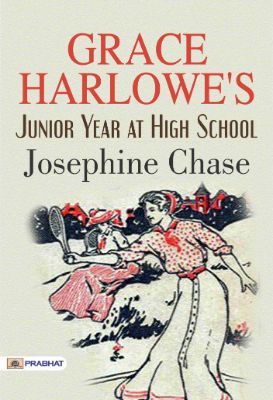
Grace Harlowe’s Junior Year at High School by Josephine Chase
To the readers of “Grace Harlowe’s Plebe Year at High School,” and “Grace Harlowe’s Sophomore Year at High School,” the girl chums have become familiar figures. It will be remembered how Grace Harlowe and her friends, Nora O’Malley and Jessica Bright, during their freshman year, became the firm friends of Anne Pierson, the brilliant young girl who won the freshman prize offered each year to the freshmen by Mrs. Gray. The reader will recall the repeated efforts of Miriam Nesbit, aided by Miss Leece, the algebra teacher, to disgrace Anne in the eyes of the faculty, and the way each attempt was frustrated by Grace Harlowe and her friends. Mrs. Gray’s house party, the winter picnic in Upton Wood, and Anne Pierson’s struggles to escape her unworthy father all contributed toward making the story stand out in the reader’s mind.
The Grammar School Boys of Gridley; or, Dick & Co. Start Things Moving by Hancock
“Master Prescott, what are you doing?”
The voice of Mr. E. Dutton Jones rasped out rather sharply, jarring on the generally studious air of the eighth-grade room of the Central Grammar School.
“What were you doing, Master Prescott?” repeated the stern voice of the principal.
Dick Prescott had glanced up, somewhat startled and confused. By this time every boy’s and girl’s eyes had turned away from text-books toward Dick Prescott.
“I was whispering, sir,” confessed Dick.
“Oh, was that all?” demanded the somewhat ironical voice of Mr. E. Dutton Jones, more commonly known as “Old Dut.”
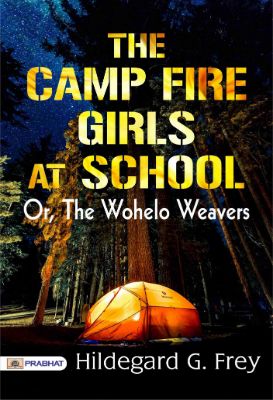
The Camp Fire Girls at School; Or, The Wohelo Weavers by Hildegard G. Frey
It was a crisp evening in October and the Winnebagos were having their Work Meeting at the Bradford house, as the guests of Dorothy Bradford, or “Hinpoha,” as she was known in the Winnebago circle. Here were all the girls we left standing on the boat dock at Loon Lake, looking just the same as when we saw them last, a trifle less sunburned perhaps, but just as full of life and spirit. Scissors, needles and crochet hooks flew fast as the seven girls and their Guardian sat around the cheerful wood fire in the library. Sahwah was tatting, Gladys and Migwan were embroidering, and Miss Kent, familiarly known as “Nyoda,” the Guardian of the Winnebago group, was “mending her hole-proof hose,” as she laughingly expressed it. The three more quiet girls in the circle, Nakwisi the Star Maiden, Chapa the Chipmunk, and Medmangi the Medicine Man Girl, were working out their various symbols in crochet patterns. Hinpoha was down on the floor popping corn over the glowing logs and turning over a row of apples which had been set before the fireplace to warm. The firelight streaming over her red curls made them shine like burning embers, until it seemed as if some of the fire had escaped from the grate and was playing around her face. Every few minutes she reached out her hand and dealt a gentle slap on the nose of “Mr. Bob,” a young cocker spaniel attached to the house of Bradford, who persistently tried to take the apples in his mouth. Nyoda finally came to the rescue and diverted his attention by giving him her darning egg to chew. The room was filled with the light-hearted chatter of the girls. Sahwah was relating with many giggles, how she had gotten into a scrape at school.

Crime And Punishment by Fyodor Dostoevsky
A few words about Dostoevsky himself may help the English reader to understand his work.
Dostoevsky was the son of a doctor. His parents were very hard-working and deeply religious people, but so poor that they lived with their five children in only two rooms. The father and mother spent their evenings in reading aloud to their children, generally from books of a serious character.
Though always sickly and delicate Dostoevsky came out third in the final examination of the Petersburg school of Engineering. There he had already begun his first work, “Poor Folk.”
This story was published by the poet Nekrassov in his review and was received with acclamations. The shy, unknown youth found himself instantly something of a celebrity. A brilliant and successful career seemed to open before him, but those hopes were soon dashed. In 1849 he was arrested.
Grace Harlowe’s Sophomore Year at High School by Josephine Chase
“Anne, you will never learn to do a side vault that way. Let me show you,” exclaimed Grace Harlowe.
The gymnasium was full of High School girls, and a very busy and interesting picture they made, running, leaping, vaulting, passing the medicine ball and practising on the rings.
In one corner a class was in progress, the physical culture instructor calling out her orders like an officer on parade.
The four girl chums had grown somewhat taller than when last seen. A rich summer-vacation tan had browned their faces and Nora O’Malley’s tip-tilted Irish nose was dotted with freckles. All four were dressed in gymnasium suits of dark blue and across the front of each blouse in letters of sky-blue were the initials “O.H.S.S.” which stood for “Oakdale High School Sophomore.” They were rather proud of these initials, perhaps because the lettering was still too recent to have lost its novelty.
Grace Harlowe’s Plebe Year at High School by Josephine Chase
“Who is the new girl in the class?” asked Miriam Nesbit, flashing her black eyes from one schoolmate to another, as the girls assembled in the locker room of the Oakdale High School.
“Her name is Pierson; that is all I know about her,” replied Nora O’Malley, gazing at her pretty Irish face in the looking glass with secret satisfaction. “She’s very quiet and shy and looks as if she would weep aloud when her turn comes to recite, but I’m sure she’s all right,” she added good naturedly. For Nora had a charming, sunny nature, and always saw the best if there was any best to see.
“She is very bright,” broke in Grace Harlowe decisively. “She went through her Latin lesson without a mistake, which is certainly more than I could do.”
“Well, I don’t like her,” pouted Miriam. “I never trust those quiet little things. And, besides, she is the worst-dressed girl in——”
Glyn Severn’s Schooldays by George Manville Fenn
The other fellows, he said, might make idiots of themselves if they liked, he should stop in and read; for Dr Bewley, DD, Principal of the world-famed establishment—a grey, handsome, elderly gentleman in the truest sense of the word—had smilingly said after grace at breakfast that when he was a boy he used to take a great deal of interest in natural history, and that he presumed his pupils would feel much the same as he did, and would have no objection to setting aside their classical and mathematical studies for the morning and watching the entrance of the procession when it entered the town at twelve o’clock.
The boys, who were all standing and waiting for the Doctor to leave the dining-hall, gave a hearty cheer at this; and as the ragged volley died out, after being unduly prolonged by the younger pupils, instead of crossing to the door from the table, the Doctor continued, turning to the mathematical master:
Betty Gordon at Boarding School; Or, The Treasure of Indian Chasm by Emerson
“Me make you velly nice apple tart. Miss Betty.” The Chinese cook flourished his rolling pin with one hand and swung his apron viciously with the other as he held open the screen door and swept out some imaginary flies.
Lee Chang, cook for the bunk house in the oil fields, could do several things at one time, as he had frequently proved.
The girl, who was watching a wiry little bay horse contentedly crop grass that grew in straggling whisps about the fence posts, looked up and showed an even row of white teeth as she smiled.
“I don’t think we’re going to stay for dinner to-day,” she said half regretfully. “I know your apple tarts, Lee Chang—they are delicious.”
The fat Chinaman closed the screen door and went on with his pastry making. From time to time, as he passed from the table to the oven, he glanced out. Betty Gordon still stood watching the horse.
“That Bob no come?” inquired Lee Chang, poking his head out of the door again. Fast developing into a good American, his natural trait of curiosity gave him the advantage of acquiring information blandly and with ease.
Betty shaded her eyes with her hand. The Oklahoma sun was pitiless. Far up the road that ran straight away from the bunk house a faint cloud of dust was rising.
“He’s coming now,” said the girl confidently.
Lee Chang grunted and returned to his work, satisfied that whatever Betty was waiting for would soon be at hand.
Jack of Both Sides: The Story of a School War by Florence Coombe
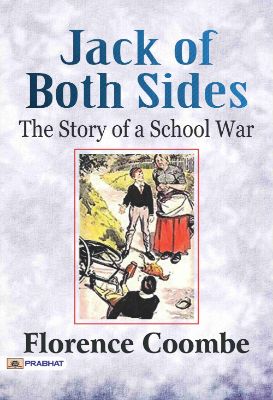
Mason and seven others were new-comers to Brincliffe School, and when the luncheon interval was heralded by the entrance of the loaf and the exit of the masters, it did not occur to them to join in the general rush that was made at the basket. And this was the sorry reward of good manners!
The fact of the matter is that they were not merely new boys, and therefore lawful game, but day-pupils. That was a grievance at Brincliffe—a great grievance. It was only last term that the first day-boy was admitted into Mr. West’s establishment. More than one young wiseacre had gloomily prophesied that Jim Bacon was the thin end of the wedge. And now they gloated, “Didn’t we say so?”
It is not easy to see at once what objection there could be to certain boys attending the school and yet sleeping in their own homes. But a rooted objection there undoubtedly was—all the stronger, perhaps, because no valid reason for it could be stated.
Now for a few moments words took the place of missiles.

Fred Fenton on the Track; Or, The Athletes of Riverport School by Allen Chapman
“I see you’re limping again, Fred.”
“That’s right, Bristles. I stubbed my toe at the very start of this cross-country run, and that lost me all chance of coming in ahead. That’s why I fell back, and have been loafing for a stretch.”
“And let me catch up with you; eh? Well, I reckon long-legged Colon will have a cinch in this race, Fred.”
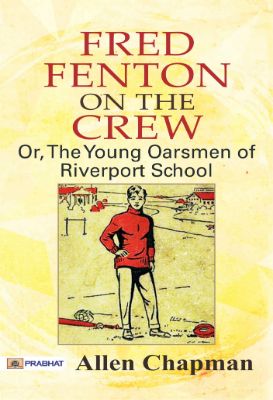
Fred Fenton on the Crew; Or, The Young Oarsmen of Riverport School by Allen Chapman
“Hello! there, Bristles!”
“Hello! yourself, Fred Fenton!”
“Why, what ails you this fine summer morning, Bristles? You don’t look as jolly as you might.”
“Well, I was only waiting to see if you cared to speak to me, Fred.”
“Why in the wide world shouldn’t I, when you’re one of my chums, Bristles Carpenter?”
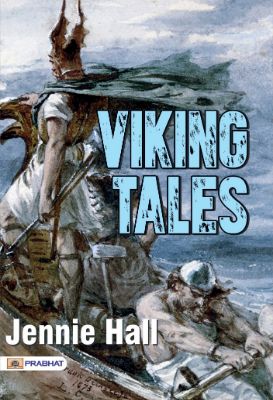
Viking Tales by Jennie Hall
So the best skalds traveled much and visited many people. Their songs made them welcome everywhere. They were always honored with good seats at a feast. They were given many rich gifts. Even the King of Norway would sometimes send across the water to Iceland, saying to some famous skald:
“Come and visit me. You shall not go away empty-handed. Men say that the sweetest songs are in Iceland. I wish to hear them.”