
Extract from Captain Stormfield?s Visit to Heaven (version 4)
Mark Twain pokes a little good natured fun at the usual concept of heaven. The story follows Captain Elias Stormfield on his extremely long cosmic journey to heaven; his accidental misplacement; his short-lived interest in singing and playing the harp (generated by his preconceptions of heaven); and the obsession of souls with the “celebrities” of heaven, like Adam and Moses, who according to Twain become as distant to most people in heaven as living celebrities are on Earth. Twain uses this story to show his view that the common conception of heaven is ludicrous and points out the incongruities of such beliefs.Lots of his usual barbed humor here. – Summary by phil chenevert and wikipedia
Extract from Captain Stormfield’s Visit to Heaven (version 3)
This was the last story published by Twain, a few months before he died. The story follows Captain Elias Stormfield on his extremely long cosmic journey to heaven. It deals with the obsession of souls with the “celebrities” of heaven, like Adam and Moses, who according to Twain become as distant to most people in heaven as living celebrities are on Earth. Twain uses this story to show his view that the common conception of heaven is ludicrous and points out the incongruities of such beliefs. A lot of the description of Heaven is given by the character Sandy McWilliams, a cranberry farmer who is very experienced in the ways of heaven. The heaven described by him is similar to the conventional Christian heaven, but includes a larger version of all the locations on Earth, as well as of everywhere in the universe. Once in heaven, the person spends eternity living as he thinks best, usually according to his true (sometimes undiscovered) talent. According to one of the characters, a cobbler who “has the soul of a poet in him won’t have to make shoes here”, implying that he would instead turn to poetry and achieve perfection in it. As Stormfield proceeds through heaven, he learns that his pre-conceptions of “heaven” are all wrong and a good part of the fun of the tale comes from Twain’s revealing the “true facts” about what heaven is and how it works. (Introduction by Wikipedia and John Greenman)

Extract from Captain Stormfield’s Visit To Heaven (version 2)
In the afterlife grizzled sea captain Eli Stormfield finds himself piloting a ship to heaven. Despite a detour and some navigation errors he arrives but finds the transition to heavenly bliss a little disconcerting. ? Although first drafted in the late 1870?s this story did not see print until the December 1907 and January 1908 issues of ?Harper?s Magazine?. The next year it was made available as a Christmas gift book and represents the last volume Mark Twain published in his lifetime. (Summary by Gregg Margarite)

Extract from Captain Stormfield’s Visit to Heaven
“Captain Stormfield’s Visit to Heaven” is a short-story written by American writer Mark Twain and published in 1909. The story follows Captain Stormfield on his extremely long cosmic journey to heaven, his accidental misplacement, his short-lived interest in singing and playing the harp, and the obsession of souls with the “celebrities” of heaven, like Adam and Moses, whom, according to Twain, become as distant to most people in heaven as living celebrities are on Earth. Twain uses this story to show his view that the common conception of heaven is ludicrous and points out the incongruities of such beliefs. (from Wikipedia)

The Extermination of the American Bison
The American bison (Bison bison), also commonly known as the American buffalo, is a North American species of bison that once roamed the grasslands of North America in massive herds, became nearly extinct by a combination of commercial hunting and slaughter in the 19th century and introduction of bovine diseases from domestic cattle. William T. Hornaday?s advocacy is credited with preserving the American bison from extinction. This book, originally published in 1887, gives Mr. Hornaday’s evidence of the Bison’s impending extinction. (Adapted from Wikipedia by Ann Boulais)

The Extant Works of St. Pacian of Barcelona
Pacian, Bishop of Barcelona in the Pyrenees, of chastened eloquence, eminent for his life as for his writings, wrote various works, of which is the Cervus and against the Novatians. He died lately in the reign of Theodosius, in extreme old age; i.e. before A. 392. He was born then probably about 30 years after the martyrdom of St. Cyprian, was a younger contemporary of Hosius, and through him joined on to the Council of Eliberis, and the restoration of discipline in the Spanish Church. His memory was kept with great affection at Barcelona on May 9, on which he is commemorated in the Martyrologium Romanum, in words taken from St. Jerome. It is of the good Providence of God, that, of the same father, works should have come down, vindicating the doctrine of the Church on penitence, as a doctrine, against the heresy of Novatian, practically, against the neglect of careless sinners. The Epistles to Sympronian and the exhortation to Penitence, combined, shew how compatible are tenderness to the sinner with a strict and, as it would now seem, severe doctrine of penitence; that not earnest calls to a self-avenging and self-chastening penitence, but the denial of its fruits and of the power of the keys, is the essence of Novatianism. Well versed as St. Pacian was in the writings of St. Cyprian, who also insists on the same acts of penitence, his language approaches more both in style and vividness of expostulation to that of Tertullian, whose work on penitence he claims, as having been written by him while a Catholic. It is hoped that from this very combination, his works might be useful in these days, in which, for want of that more frequent special application of the power of the keys, which our Church suggests, any mention of more earnest penitence is thought to partake of the hard and uncompassionating heresy of Novatian. – Summary from the Preface
The Great Events by Famous Historians, Volume 6
A comprehensive and readable account of the world’s history, emphasizing the more important events, and presenting these as complete narratives in the master-words of the most eminent historians. This is volume 6 of 22, covering from 1162-1300 AD. – Summary Adapted from the Title Page
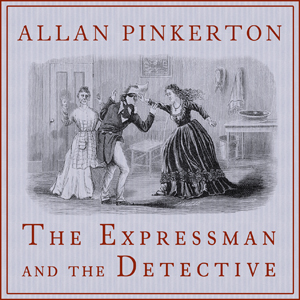
The Expressman and the Detective
Allan Pinkerton (1819-1884), a Scotsman by birth and a barrel-maker by trade, settled in Chicago in its infancy and founded the Pinkertons, the world’s first detective agency. Though events associated with the agency after his death have tarnished the name, Pinkerton himself was one of the original human rights advocates. He was a dear friend to John Brown, an advisor to Abraham Lincoln, and 80 years ahead of his time in hiring female detectives. He was also stubborn, irascible, and an egomaniac. The Expressman and the Detective (1874) is Pinkerton’s first attempt at putting his real-life experiences into novel form. Though many later works attributed to Pinkerton are understood to have been ghostwritten, this is the work of the man the London Times calls “a man at once deeply admirable and quite obnoxious.” (Summary by Pete Williams)
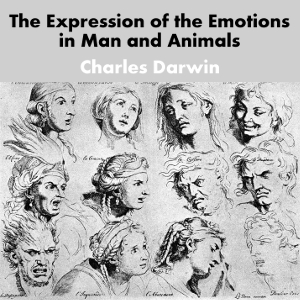
The Expression of the Emotions in Man and Animals
The Expression of the Emotions in Man and Animals is a book by Charles Darwin, published in 1872, concerning genetically determined aspects of behaviour. It was published thirteen years after On the Origin of Species and alongside his 1871 book The Descent of Man, it is Darwin’s main consideration of human origins. In this book, Darwin seeks to trace the animal origins of human characteristics, such as the pursing of the lips in concentration and the tightening of the muscles around the eyes in anger and efforts of memory. Darwin sought out the opinions of some eminent British psychiatrists, notably James Crichton-Browne, in the preparation of the book which forms Darwin’s main contribution to psychology. – Summary by Availle

Short Nonfiction Collection, Vol. 038
Eighteen short nonfiction works in the public domain, independently chosen by the readers. Topics include bedside books, South African cookery, Bryce canyon, Wilhelm Stekel’s psychology, the Theologia Germanica, Paracelsus, John Donne, Cotton Mather, Julia Smith’s translation of the Bible, Zen Buddhism, American immigrants, slavery, Joseph Crosby Lincoln, Oscar Wilde, Albert Einstein, and cats. “Cats and Their Care” was edited by Liberty Hyde Bailey. “Looking Backward” was translated by Samuel Aaron Tannenbaum. “The Collector” was translated by Rosalie Gabler. “Thelogia Germanica” was translated by Susanna Winkworth. (summary by Sue Anderson)
Expository Thoughts on the Gospels – St. Matthew
?Expository Thoughts? divides the Gospels into sections of about twelve verses each, from which J. C. Ryle selects two or three prominent points to dwell on and bring to the reader?s attention. In Ryle?s day, there were many detailed commentaries and expositions on scripture. In writing these ?Expository Thoughts?, Ryle aimed to offer a resource to the laity for use in family prayers, as an aid to those who visit the sick and desire a proper book to read on such occasions, and for private devotions for those whose callings and engagements make it impossible for them to read large commentaries. Rev. Ryle offered this first volume on the Gospel of St. Matthew ?with an earnest prayer, that it may tend to the promotion of pure and undefiled religion, help to extend the knowledge of Christ, and be a humble instrument in aid of the glorious work of converting and edifying immortal souls.? (Introduction by MaryAnn) Books in this series: Expository Thoughts on the Gospel of St. Matthew Expository Thoughts on the Gospel of St. Mark Expository Thoughts on the Gospel of St. Luke, Vol. 1 Expository Thoughts on the Gospel of St. Luke, Vol. 2 Expository Thoughts on the Gospel of St. John, Vol. 1 Expository Thoughts on the Gospel of St. John, Vol. 2 Expository Thoughts on the Gospel of St. John, Vol. 3
Expository Thoughts on the Gospels – St. Mark
?Expository Thoughts? divides the Gospels into sections of about twelve verses each, from which J. C. Ryle selects two or three prominent points to dwell on and bring to the reader?s attention. In Ryle?s day, there were many detailed commentaries and expositions on scripture. In writing these ?Expository Thoughts?, Ryle aimed to offer a resource to the laity for use in family prayers, as an aid to those who visit the sick and desire a proper book to read on such occasions, and for private devotions for those whose callings and engagements make it impossible for them to read large commentaries. This second volume of the work presents Rev. Ryle’s meditations on St. Mark. As with the first volume on the Gospel of St. Matthew, Rev. Ryle offered this book ?with an earnest prayer, that it may tend to the promotion of pure and undefiled religion, help to extend the knowledge of Christ, and be a humble instrument in aid of the glorious work of converting and edifying immortal souls.? (Introduction by MaryAnn) Books in this series: Expository Thoughts on the Gospel of St. Matthew Expository Thoughts on the Gospel of St. Mark Expository Thoughts on the Gospel of St. Luke, Vol. 1 Expository Thoughts on the Gospel of St. Luke, Vol. 2 Expository Thoughts on the Gospel of St. John, Vol. 1 Expository Thoughts on the Gospel of St. John, Vol. 2 Expository Thoughts on the Gospel of St. John, Vol. 3
Contentment
Eugene Field, Sr. was an American writer, best known for his children’s poetry and humorous essays.
A Contented Man
LibriVox volunteers bring you 11 recordings of A Contented Man by Ivan Sergeyevich Turgenev. This was the Weekly Poetry project for September 5, 2021. —— Ivan Sergeyevich Turgenev was a Russian novelist, short story writer, poet, playwright, translator and popularizer of Russian literature in the West. Constance Clara Garnett was an English translator of nineteenth-century Russian literature. She was the first English translator to render numerous volumes of Anton Chekhov’s work into English. Altogether, she translated 71 volumes of Russian literature, many of which are still in print today. – Summary by Wikipedia
Contending Forces
Pauline Elizabeth Hopkins, despite an impressive record of productivity and creativity as a novelist, playwright, short fiction writer, editor, actress, and singer, is an African-American woman writer who has essentially been consigned to the dustbins of American literary history. Though contemporary with Frances Ellen Watkins Harper, Charles W. Chesnutt, and Paul Laurence Dunbar, Hopkins is only now beginning to receive the kind of critical attention that Harper has enjoyed for a slightly longer period and that Chesnutt and Dunbar have always had. Hopkins had work published in several genres, but her reputation today rests primarily upon Contending Forces: A Romance Illustrative of Negro Life North and South, the novel she published in 1900. (Introduction by Margaret)

Contagion
Minos was such a lovely planet. Not a thing seemed wrong with it. Excepting the food, perhaps. And a disease that wasn’t really. Originally published in Galaxy Science Fiction, October, 1950. Katherine Anne MacLean (born January 22, 1925) is an American science fiction author best known for her short fiction of the 1950s which examined the impact of technological advances on individuals and society. – Summary by Wikipedia, story heading, and david wales
Consuelo
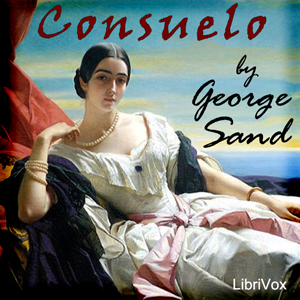
This roman ? clef follows the musical adventures of Consuelo, a gifted singer under the tutelage of the composer Nicola Porpora. After encountering betrayal in her home city of Venice, she goes to stay with a family of nobles in an isolated castle in Bohemia and teach singing to the baroness who lives there. It is there that she meets Count Albert, a troubled young man who experiences regressions to past lives. He is strangely drawn to her, but she, though moved with pity for him, is unsure what to think of him. She then sets out for Vienna to meet with Porpora again and on the way befriends a young Joseph Haydn. The two do their best to skirt intrigue and peril during their journey while Consuelo engages in soul-searching to determine who Count Albert is to her. (Summary by Scarbo)
Constructive Conscious Control of the Individual
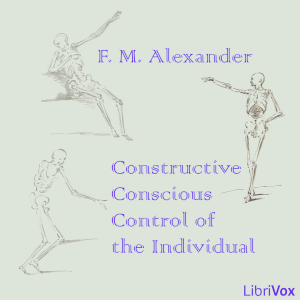
F. Matthias Alexander was an Australian actor, author and educator, who is best known as the inventor of Alexander Technique, a method for “unlearning” acquired habits of movement and posture that are harmful or suboptimal, and allowing natural, healthy patterns of body use to emerge in their place. Alexander Technique is now taught by specially trained instructors through in-person lessons around the world, and is particularly popular among musicians and other performance artists. In this 1923 book, considered by many to be his best, Alexander explains the principles of his technique and the theory behind it. It includes an introduction by the American philosopher and educator John Dewey, who studied the technique with Alexander. (Summary by Kazbek)
Constructive Beekeeping
The author explores the effects of condensation and evaporation as they relate to the success of a beehive. The results of various experiments and the author’s thoughts are given. (Summary by SoMDbeekeeper)

Constitutions of the Holy Apostles (Books 1 to 3)
The Apostolic Constitutions are made up of eight treatises on Early Christian discipline, worship, and doctrine, which was intended to act as a manual of guidance for the clergy, and laity. It claims to be composed by the Twelve Apostles who received these instructions from Jesus Christ, although most scholars believe it to be a 4th-century work. The structure of the work is as follows: Books 1 to 6 are a re-writing of the Didascalia Apostolorum. Book 7 is based largely on the Didache, with Chapters 33-45 containing prayers similar to existing Jewish ones. Book 8 has a treatise on charismata, along with, what are known as, the Canons of the Apostles. (Summarized from Wikipedia)

The Constitution of the United States of America, 1787
This 1787 document defines the rights and responsibilities of federal government of the United States of America.
The Constitution of Athens
The Constitution of Athens (Greek: ???????? ????????) was written by Aristotle or his student. The text was lost until discovered in the late 19th century in Egypt. Topics discussed include Solon’s legislative reforms abolishing debt slavery and the rise and decline of democracy and tyranny in Athens. (Summary by Geoffrey Edwards)
The Constant Lover
Sir John Suckling (1609-42) was one of the Cavalier poets at the court of King Charles I of England. He took up arms in the conflicts of that era but was said to be more fit for the boudoir than the battlefield. He was a prolific lover, a sparkling wit and an excessive gamester and is credited with inventing the card game, Cribbage. Cavalier poetry was witty, decorous and sometimes naughty. The Constant Lover displays these elements as well as Suckling’s conversational ease and charm.
The Constant Couple
George Farquhar, the author of this comedy, was the son of a clergyman in the north of Ireland. He was born in the year 1678, discovered an early taste for literature, and wrote poetic stanzas at ten years of age. In 1694 he was sent to Trinity College, Dublin, and there made such progress in his studies as to acquire considerable reputation. But he was volatile and poor?the first misfortune led him to expense; the second, to devise means how to support his extravagance. In the year 1700 he brought out this comedy of “The Constant Couple; or, A Trip to the Jubilee.” It was then the Jubilee year at Rome, and the author took advantage of that occurrence to render the title of his drama popular; for which cause alone it must be supposed he made any thing in his play refer to that festival, as no one material point is in any shape connected with it. – Summary by Mrs Inchbald, a critic of that time Cast list: Sir Harry Wildair: John Burlinson Alderman Smuggler: Kristin Gjerl?w Colonel Standard: ToddHW Clincher Junior: KHand Clincher Senior: K. Adrian Stroet Vizard: technoauloin Tom Errand: Dillon McFarlane Dicky: alanmapstone Constable: Newgatenovelist Servants: Anna Simon Lady Lurewell: Availle Lady Darling: Elizabeth Klett Angelica: Sonia Parly: Jacqui Castle Tom Errand’s Wife: Leanne Yau Mob: Sonia Stage Directions: Gaby Edited and Coordinated by: ToddHW
Constance Dunlap
Constance Dunlap is a young woman who in Chapter 1 turns amateur criminal in order to to save her husband from disgrace and imminent arrest. When this sadly doesn’t work out exactly as planned, Constance goes on to embrace a new life. More antiheroine than heroine, she uses her wits and new found talents to aid others in avoiding retribution for their crimes always one step ahead of the detective pursuing her. Summary by J. M. Smallheer

The Conspiracy of Pontiac and the Indian War after the Conquest of Canada
“The Conspiracy of Pontiac” was Parkman’s first history book and first published in 1851. It covers the Indian wars of 1763 to 1769. Pontiac, an Ottawa chief, put together a coalition of Indian tribes from around the Great Lakes region and the Illinois and Ohio Countries to attack the British under General Jeffrey Amherst. – Summary by Richard Carpenter
The Consoling Thoughts of Saint Francis de Sales
Francis de Sales (1567-1622) was a French priest and later bishop of Geneva who was revered as a master of spiritual direction and fondly remembered for his keen insights into the personal spiritual struggles of men and women of all faiths. His Introduction to the Devout Life, which he wrote especially for laypersons, and his Treatise on the Love of God remain fundamental reading for all earthly pilgrims who seek personal moral improvement and strive for spiritual perfection. Pere Huguet has gathered together in this one volume some of the more poignant insights and suggestions contained in the writings of Saint Francis de Sales and organized them under more than eighty chapters. They are sure to bring comfort to the weary and guidance to all of us who, from time to time, lose our way. (Introduction by dave7)

Birds, Vol. III, No 1, January 1898
Birds, Illustrated by Color Photography was a monthly publication of the Nature Study Publishing Company of Chicago. It includes short poems, anecdotes and factual descriptions of birds with accompanying color plates. The magazine was published from 1898-1907 under the various titles, “Birds,” “Birds and all Nature,” “Nature and Art” and “Birds and Nature.” Later issues were expanded to include animals, plants, etc. Summary by J. M. Smallheer
Birds, Vol. II, No 6, December 1897
Birds, Illustrated by Color Photography was a monthly publication of the Nature Study Publishing Company of Chicago. It includes short poems, anecdotes and factual descriptions of birds with accompanying color plates. The magazine was published from 1897-1907 under the various titles, “Birds,” “Birds and all Nature,” “Nature and Art” and “Birds and Nature.” Later issues were expanded to include animals, plants, etc. Summary by J. M. Smallheer
Birds, Vol. II, No 5, November 1897
Birds, Illustrated by Color Photography was a monthly publication of the Nature Study Publishing Company of Chicago. It includes short poems, anecdotes and factual descriptions of birds with accompanying color plates. The magazine was published from 1897-1907 under the various titles, “Birds,” “Birds and all Nature,” “Nature and Art” and “Birds and Nature.” Later issues were expanded to include animals, plants, etc. Summary by J. M. Smallheer