
The National Geographic Magazine Vol. 07 – 08. August 1896
The National Geographic Magazine, an illustrated monthly, the August Number. It includes the following articles: * The Work of the National Geographic Society * Eighth Annual Field Meeting of the National Geographic Society * Geographic History of the Piedmont Plateau, by W J McGee * Spottswood’s Expedition of 1716, by Dr William M. Thornton * Jefferson as a Geographer, by Gen. A. W. Greely * Albemarle in Revolutionary Days, by Dr G. Brown Goode along with Geographic Notes and Miscellanea.

The Alaskan
A wilderness story of adventure and intrigue in Alaska in the 1920?s. Summary by Maire Rhode.
Alarms and Discursions
Gilbert Keith Chesterton was an influential English writer of the early 20th century. His prolific and diverse output included journalism, philosophy, poetry, biography, Christian apologetics, fantasy, and detective fiction. Chesterton has been called the “prince of paradox.” He wrote in an off-hand, whimsical prose studded with startling formulations. Chesterton wrote about 4000 essays on various subjects, and “Alarms and Discursions is one of his collections. (Summary adapted from Wikipedia by Karen Merline.)

Alarm Clocks
Joyce Kilmer (born as Alfred Joyce Kilmer) was an American writer and poet mainly remembered for a short poem titled “Trees” (1913), which was published in the collection Trees and Other Poems in 1914. While most of his works are largely unknown, a select few of his poems remain popular and are published frequently in anthologies. At the time of his deployment to Europe during World War I, Kilmer was considered the leading American Roman Catholic poet and lecturer of his generation, whom critics often compared to British contemporaries G. K. Chesterton (1874?1936) and Hilaire Belloc (1870?1953). He enlisted in the New York National Guard and was deployed to France with the 69th Infantry Regiment (the famous “Fighting 69th”) in 1917. He was killed by a sniper’s bullet at the Second Battle of the Marne in 1918 at the age of 31. – Summary by Wikipedia
Aladore
Ywain, a knight bored with his administrative duties, abandons his estate to his younger brother and goes on a pilgrimage to seek his heart’s desire. Following a will-o’-the-wisp resembling a child, his quest takes him to the city of Paladore, where he meets the lady Aithne, half-fae enchantress. Sir Henry Newbolt’s allegorical fantasy was published in hardback in Britain in 1914 and in the Uniited States a year later. It was revived in 1975 as the fifth volume in the celebrated Newcastle Forgotten Fantasy Library. – Summary by Phil Benson, adapted from Wikipedia
Aladdin, Or, The Wonderful Lamp (A Dramatic Poem, in Two Parts)
This retelling of Aladdin in dramatic verse begins in the humble home of a tailor, whose son spends his days in idleness and brings his parents nothing but grief. Soon, however, this son is brought to a magical grotto, where he finds a great treasure which will bring him his fortune. This story will have some twists and turns that are almost certain to be different from the story you know. – Summary by Devorah Allen Cast: Tomas Peter: Aladdin Jenn Broda: Gulnare, the Princess Michele Eaton: Nurse to Gulnare Availle: Morgiana, Aladdin’s Mother Algy Pug: Soliman, the Sultan Tommy Hersant: Vizir to Soliman Adrian Stephens: Saladin, betrothed to Gulnare ToddHW: The Enchanter, Noureddin VocalPenguin: Hindbad, Noureddin’s brother Sonia: Spirit of the Lamp Phil Schempf: Spirit of the Ring Donzo: Selim Tindra: Slave Gerald Moe: Jester HelenaDiamandiz: Court Jew Diane Castillo: Old Man czandra: Second Courtier Chuck Williamson: Servant of the Court Anya: Captain of the Body Guard Eleonora Bettenzoli: Spider Kristine Wales: Voice of the Trees Linda Olsen Fitak: First Fairy Twinkle: Peasant; Second Fairy ambsweet13: Zephyr; Second Elf FreckleFriday: Bedreddin; Lympha, a Fairy Thoria: Master Mason; First Courtier; Deathwatch Pier: First Lord of the Treasury; Strength, a Giant Michael L. Hooper: Second Lord of the Treasury Tchaikovsky: Architect; Apothecary; Owner of the House Lydia: Zulima, Soliman’s Wife; Peribanou, Queen of the Fairies; Fatima Doug Fajardo: Sindbad; Grocer; Sentinel; Laborer; Headsman David Purdy: Ali; Casem; Goldsmith; Sculptor; First Elf; Good Spirits Devorah Allen: Nightingale; Melpomene; Female Bird; Beauty, a Fairy Alan Mapstone: Mustapha, Aladdin’s Father; An Old Jew; Ali Baba, an Astrologer; Coppersmith; Headsman’s Assistant; Minstrel; Male Bird; The Water Spirit; Wicked Spirits Wayne Cooke: Narrator

Short Story Collection Vol. 034
LibriVox?s Short Story Collection 034: a collection of 20 short works of fiction in the public domain read by a group of LibriVox members.
Children’s Short Works, Vol. 004
LibriVox?s Children?s Short Works Collection 004: a collection of 11 short works for children in the public domain read by a variety of LibriVox members.

An Alabama Student And Other Biographical Essays
Here are thirteen biographical sketches of physicians penned by one of the founders of modern medicine, William Osler, published in 1908. “Sir William Osler, one of the best-loved and most influential teachers of his time, was born in Canada in 1849?. Wherever he worked his gifted and unique personality was a center of inspiration? one would like to see his honorable place as a man of letters more generally understood. His generous wisdom and infectious enthusiasm are delightfully expressed in his collected writings?. His lucid and exquisite prose, with its extraordinary wealth of quotation from the literature of all ages, and his unfailing humor and tenderness, put him in the first rank of didactic essayists?. Rich in every gentle quality that makes life endeared, his books are the most sagacious and helpful of modern writings?” – Summary by Christopher Morley, Modern Essays, 1921, and David Wales
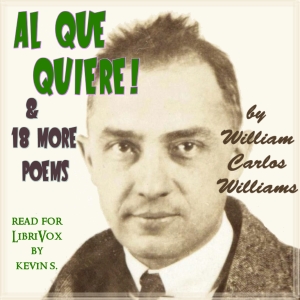
Al Que Quiere! (and 18 more poems)
A book of William Carlos Williams’s early poetry. Included in this recording are 18 poems published by Williams in Volume 13 of ‘Poetry’ literary journal in 1919. – Summary by KevinS
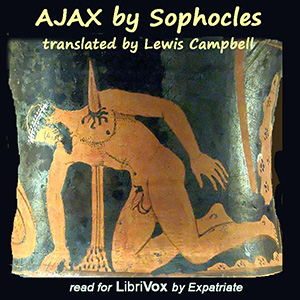
Ajax (Campbell Translation)
Ajax is a Greek tragedy written in the 5th century BC. The date of Ajax’s first performance is unknown and may never be found, but most scholars regard it as an early work, c. 450 – 430 BC. It chronicles the fate of the warrior Ajax after the events of the Iliad, but before the end of the Trojan War. At the onset of the play, Ajax is enraged because Achilles’ armor was awarded to Odysseus, rather than to him. He vows to kill the Greek leaders who disgraced him. Before he can enact his extraordinary revenge, though, he is tricked by the goddess Athena into believing that the sheep and cattle that were taken by the Achaeans as spoil are the Greek leaders. Much of the play shows the disintegration of Ajax in the face of this humiliation, leading ultimately to his suicide. – Summary by Wikipedia (edited by Expatriate)
Aitreya-Aranyaka Upanishad
The word Upanishad (upa-ni-shad) consists of, “Upa” means “near;” “ni” means “down;” “shad” means “to sit.” Thus, Upanishad is to sit down near the teacher to discuss, learn, practice, and experience. There are some 200 or more Upanishads. Some are lost and are only known about because of being referenced in other Upanishads. Most of the Upanishads were kept secret for centuries, only passed on to others orally in the form of Shlokas (a category of verse line developed from the Vedic Anustubh meter). Aryanka (Snskrit) ?????? means means pertaining to the forest. Aranyaka refers to a treatise to be read or expounded by anchorites in the quiet of the forest. Some Upanishads are incorporated inside Aranyakas. The subjects treated by Aranyakas are, in general, liturgical whereas the Upanishads are philosophical. The Aitareya-Aranyaka consists of three Aryankas. The first Aranyaka is purely liturgical, giving a description of the Mahavrata ritual. The second and third Aranyankas consist of the Mahaitareya Upanishad, while the Upanishad generally known as Aitareya Upanishad comprises 4th, 5th, and 6th adhyayas of the second Aranyaka. The date of Aitareya Upanishad is not known but has been estimated by scholars to be sometime around 6th or 5th century BCE. The 11 principal Upanishads to which Sankara appeals in his great commentary on the Vedanta-Surtras are: Chandogya, Talavakara or Kena, Aitareya, Kaushitaki, Vajasaneyi or Isha, Katha, Mundaka, Taittirtiyaka or Taittiriya, Brihadaranyaka, Svetasvatara, and Prasna. They are also called the 11 classical Upanishads or the fundamental Upanishads of the Vedanta Philosophy. Apart from these, Maitrayana-Brahmana-Upanishad is also considered as an important Upanishad. The Upanishadic literature is not a religious scripture and is free from dogma and doctrines. It is not a part of any religion but is a philosophy for all times and for all. German philosopher Arthur Schopenhauer, impressed by the Upanishads, called the texts “the production of the highest human wisdom”. – Summary by Jothi
The Airship Boys in the Great War
Little did Alan, Ned and Buck suspect what they were getting themselves in for when they approached the editor of The Herald with their plan to re-employ the Ocean Flyer, flying it back across the Atlantic Ocean to rescue their friend and the newspaper?s reporter, Bob Russell, from the clutches of the German military, who had taken him prisoner, accused him of spying, and, possibly, might condemn him to face a firing squad in the early days of ?The Great War? in Europe during 1914. All they knew was they had to do something to help Bob and, hopefully, Mr. Latimer, managing editor of The Herald, would help. (Summary by Tom Hirsch)
Airplane Flying Handbook FAA-H-8083-3A – Vol. 3
This audiobook is third and final volume of the Airplane Flying Handbook. This volume is chapter 16, Emergency Procedures. From the preface: “The Airplane Flying Handbook is designed as a technical manual to introduce basic pilot skills and knowledge that are essential for piloting airplanes. It provides information on transition to other airplanes and the operation of various airplane systems. It is developed by the Flight Standards Service, Airman Testing Standards Branch, in cooperation with various aviation educators and industry.” This volume applies to basic piloting skills and training aircraft, Volume 1, as well as transitions to other types of aircraft, Volume 2. – Summary by Norman Elfer
Airplane Flying Handbook FAA-H-8083-3A – Vol. 2
This audiobook is volume 2 from the Airplane Flying Handbook FAA-H-8083-3A. This volume covers chapters 11 to 15, on transitions to complex, multiengine, tailwheel, turboprop, and jet aircraft. Study of the handbook should include the PDF from the FAA, which is available at http://www.faa.gov/regulations_policies/handbooks_manuals/ . From the preface: “The Airplane Flying Handbook is designed as a technical manual to introduce basic pilot skills and knowledge that are essential for piloting airplanes. It provides information on transition to other airplanes and the operation of various airplane systems. It is developed by the Flight Standards Service, Airman Testing Standards Branch, in cooperation with various aviation educators and industry.” Chapters 1-10 are recorded in Volume 1 and Chapter 16, Emergency Procedures, is Volume 3. – Summary by Norman Elfer
Airplane Flying Handbook FAA-H-8083-3A – Vol. 1
This audiobook contains chapters 1 through 10 from the Airplane Flying Handbook FAA-H-8083-3A. Study of the handbook should include the PDF from the FAA, which is available at http://www.faa.gov/regulations_policies/handbooks_manuals/. From the preface: “The Airplane Flying Handbook is designed as a technical manual to introduce basic pilot skills and knowledge that are essential for piloting airplanes. It provides information on transition to other airplanes and the operation of various airplane systems. It is developed by the Flight Standards Service, Airman Testing Standards Branch, in cooperation with various aviation educators and industry. This handbook is developed to assist student pilots learning to fly airplanes. It is also beneficial to pilots who wish to improve their flying proficiency and aeronautical knowledge, those pilots preparing for additional certificates or ratings, and flight instructors engaged in the instruction of both student and certificated pilots. It introduces the future pilot to the realm of flight and provides information and guidance in the performance of procedures and maneuvers required for pilot certification.” This audiobook, chapters 1 through 10 from the Airplane Flying Handbook, is Volume I. Chapters 11 -15 titled “Transition to ….” are recorded in Volume 2, and Chapter 16 “Emergency Procedures” is recorded in Volume 3. – Summary by Norman Elfer
Airplane Boys in the Black Woods
?The Airplane Boys accidentally bump into a new mystery which is only solved after many pages of excitement in this seventh book of air adventures.? Excerpt From: E. J. Craine. ?Airplane Boys in the Black Woods.?
The Airplane Boys among the Clouds
Elephant and Larry arrive at Sunrise Lake, looking for the Bird boys, Frank and Andy, who are trying out a new biplane. Many adventures await these young men in their airplane!
The Airlords of Han
Airlords of Han is the 2nd Buck Rogers story, the sequel to Armageddon 2419 A.D.. Anthony Rogers takes the fight to free 25th Century America to the Han overlords. From the March, 1929 issue of Amazing Stories. (Summary by Alan Winterrowd)
Aircraft and Submarines
“Aircraft and Submarines” is a history of the development of these forms of transportation and their ultimate use in warfare. Also a brief history of submarine use in commercial applications. A thoroughly enjoyable piece for anyone interested in the detailed development of these modes of transportation. Summary by William Tomcho
Short Poetry Collection 171
This is a collection of 30 poems read by LibriVox volunteers for August 2017.
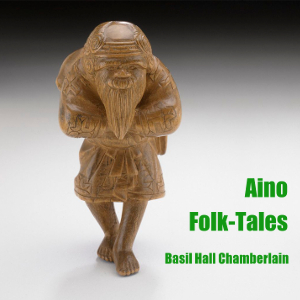
Aino Folk-Tales
Not for the squeamish or for children, these folk-tales are from the Ainu, the somewhat mysterious indigenous people of Japan, thousands of whom still live in the northern Japanese island of Hokkaido. Ranging over all of the usual themes of folklore, from creation to marriage to war, these stories have a pungent, ribald frankness concerning all aspects of human life that offended their scholarly collector Basil Hall Chamberlain (his apologies to the reader are themselves entertaining) but that make them fresh, provocative, and amusing to the twenty-first century reader. Attention to the Ainu is especially timely because of the revival in Japan of Ainu activism on behalf of indigenous rights, pride, and culture, but are well worth reading for their purely entertainment value.

Il ?tait une fois… – 002 (contes pour enfants)
Hans Christian Andersen, Charles Perrault et les fr?res Grimm, pour ne nommer que ceux-l? : autant d?auteurs d?exception dont les contes et autres histoires ont captiv? des g?n?rations d?enfants, petits et grands. Dans le second volume de cette collection d?histoires et de contes pr?f?r?s des enfants, vous d?couvrirez (ou red?crouvrirez) vingt de ces r?cits, tant?t tr?s populaires, tant?t moins connus. Ouvrez toutes grandes vos oreilles, et laissez-vous transporter! (Description par ani)
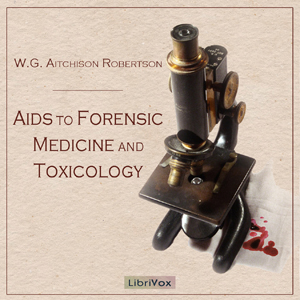
Aids to Forensic Medicine and Toxicology
A 1922 source-book for British criminal pathologists, this will be of particular interest to fans of popular police forensics television shows, films, and murder mysteries.(Summary by BellonaTimes)

Short Poetry Collection 162
This is a collection of 28 poems read by LibriVox volunteers for November 2016.
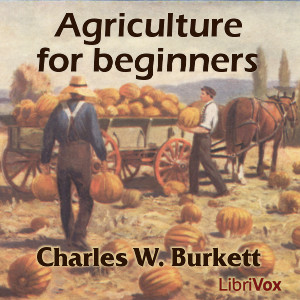
Agriculture for Beginners
A textbook used by many public schools in the early 20th century. The authors believe that “agriculture is eminently a teachable subject. They see no difference between teaching the child the fundamental principles of farming and teaching the same child the fundamental truths of arithmetic, geography, or grammar. They hold that a youth should be trained for the farm just as carefully as he is trained for any other occupation, and that it is unreasonable to expect him to succeed without training.” – Summary by the authors
Agricola
The Agricola (Latin: De vita et moribus Iulii Agricolae, lit. On the life and character of Julius Agricola) is a book by the Roman historian Tacitus, written c 98, which recounts the life of his father-in-law Gnaeus Julius Agricola, an eminent Roman general. It also covers, briefly, the geography and ethnography of ancient Britain. As in the Germania, Tacitus favorably contrasts the liberty of the native Britons to the corruption and tyranny of the Empire; the book also contains eloquent and vicious polemics against the rapacity and greed of Rome. This translation by Alfred John Church and William Jackson Brodribb, was first published in 1877. (Summary from Wikipedia.

The Agony Column
English romantic adventure starring a young American in London and inspired by the personal ads (agony columns) in the London papers. In this treacherous tale of murder and intrigue young American Geoffrey West tracks a killer from the posh dining room of the Carlton Hotel to the opium dens of London’s Limehouse district in search of the truth and the heart of his true love only to find the culprit all too close to home. Earl Derr Biggers is better known as the author of numerous Charlie Chan novels, The Agony Column was released as a movie under the name Second Floor Mystery in 1930. While this movie was in production, its two stars, Loretta Young and Grant Withers, eloped. (Summary by peac)
Agnes Sorel
The Hundred Years’ War: a series of conflicts waged from 1337 to 1453 by the House of Plantagenet, rulers of the Kingdom of England, against the House of Valois, rulers of the Kingdom of France, over the succession to the French throne. It was a time of intrigue, plot, murder and romance. Agnes Sorel, aged 20, became the favorite mistress of the King of France, wielding much influence over him and earning many enemies. Her untimely death at the age of 28, just days after bearing him a fourth child, was blamed on dysentery. In this novel, we follow the trials of Jean Charost, secretary to the Duke of Orleans and brother of the king; and see how his life was entwined with that of the beautiful Agnes. – Summary by Lynne Thompson
Short Nonfiction Collection, Vol. 050
Seventeen short nonfiction works in the public domain, independently chosen by the readers. Topics include science and natural history–the donkey, forestry, grape vines, astronomy, historian Agnes Mary Clerke, and Greek botanist Theophrastus ; philosophy– Nicholas of Cusa and Emmanuel Kant; Sommerset Maugham’s reminiscences of Spain; Joseph Conrad’s sea stories; an encounter with a long-ago companion who has contracted leprosy (Joe of Lahaina); working in the dead-letter office; a dinner the painter Benjamin Hayden hosted for Wordsworth, Keats, and Charles Lamb; a portrait of Margaret Fuller by R.W. Emerson; a 19th century account of English character written for the Chinese; and celebrations of American ideals of freedom and self government–Makers of the Flag, An Oration on Thomas Paine, and Thomas Jefferson’s 4th of July letter. – summary by Sue Anderson