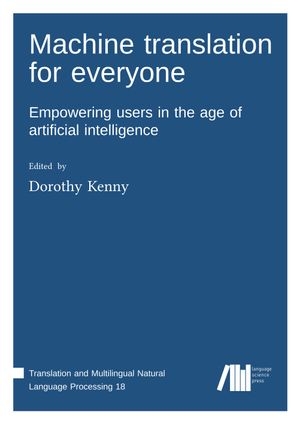

Machine translation for everyone:: Empowering users in the age of artificial intelligence
Language learning and translation have always been complementary pillars of multilingualism in the European Union. Both have been affected by the increasing availability of machine translation (MT): language learners now make use of free online MT to help them both understand and produce texts in a second language, but there are fears that uninformed use of the technology could undermine effective language learning. At the same time, MT is promoted as a technology that will change the face of professional translation, but the technical opacity of contemporary approaches, and the legal and ethical issues they raise, can make the participation of human translators in contemporary MT workflows particularly complicated. Against this background, this book attempts to promote teaching and learning about MT among a broad range of readers, including language learners, language teachers, trainee translators, translation teachers, and professional translators. It presents a rationale for learning about MT, and provides both a basic introduction to contemporary machine-learning based MT, and a more advanced discussion of neural MT. It explores the ethical issues that increased use of MT raises, and provides advice on its application in language learning. It also shows how users can make the most of MT through pre-editing, post-editing and customization of the technology.
| Publication Language |
English |
|---|---|
| Publication Access Type |
Freemium |
| Publication Author |
Dorothy Kenny |
| Publisher |
Language Science Press |
| Publication Year |
2023 |
| Publication Type |
eBooks |
| ISBN/ISSN |
9780000000000 |
| Publication Category |
Open Access Books |
Kindly Register and Login to Shri Guru Nanak Dev Digital Library. Only Registered Users can Access the Content of Shri Guru Nanak Dev Digital Library.
You must be logged in to post a review.







Reviews
There are no reviews yet.